ARTICLES
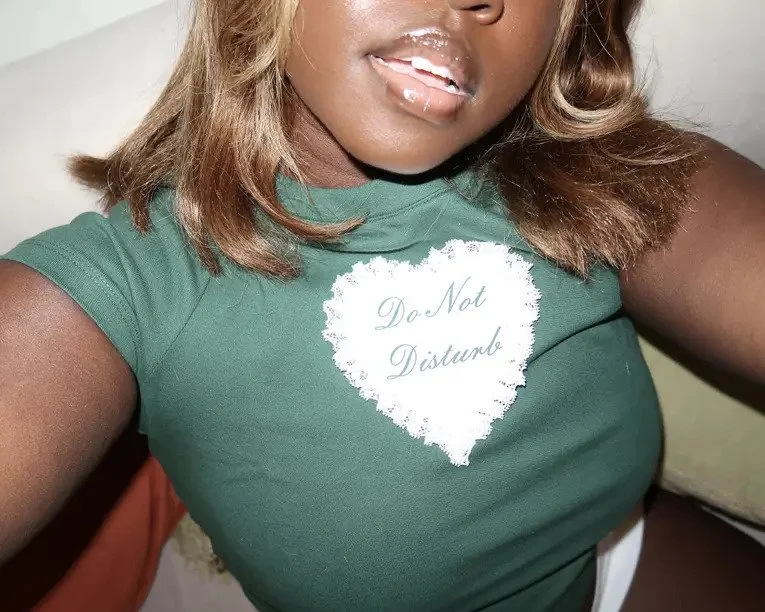
Your FYP’s Dictating Your Outfit
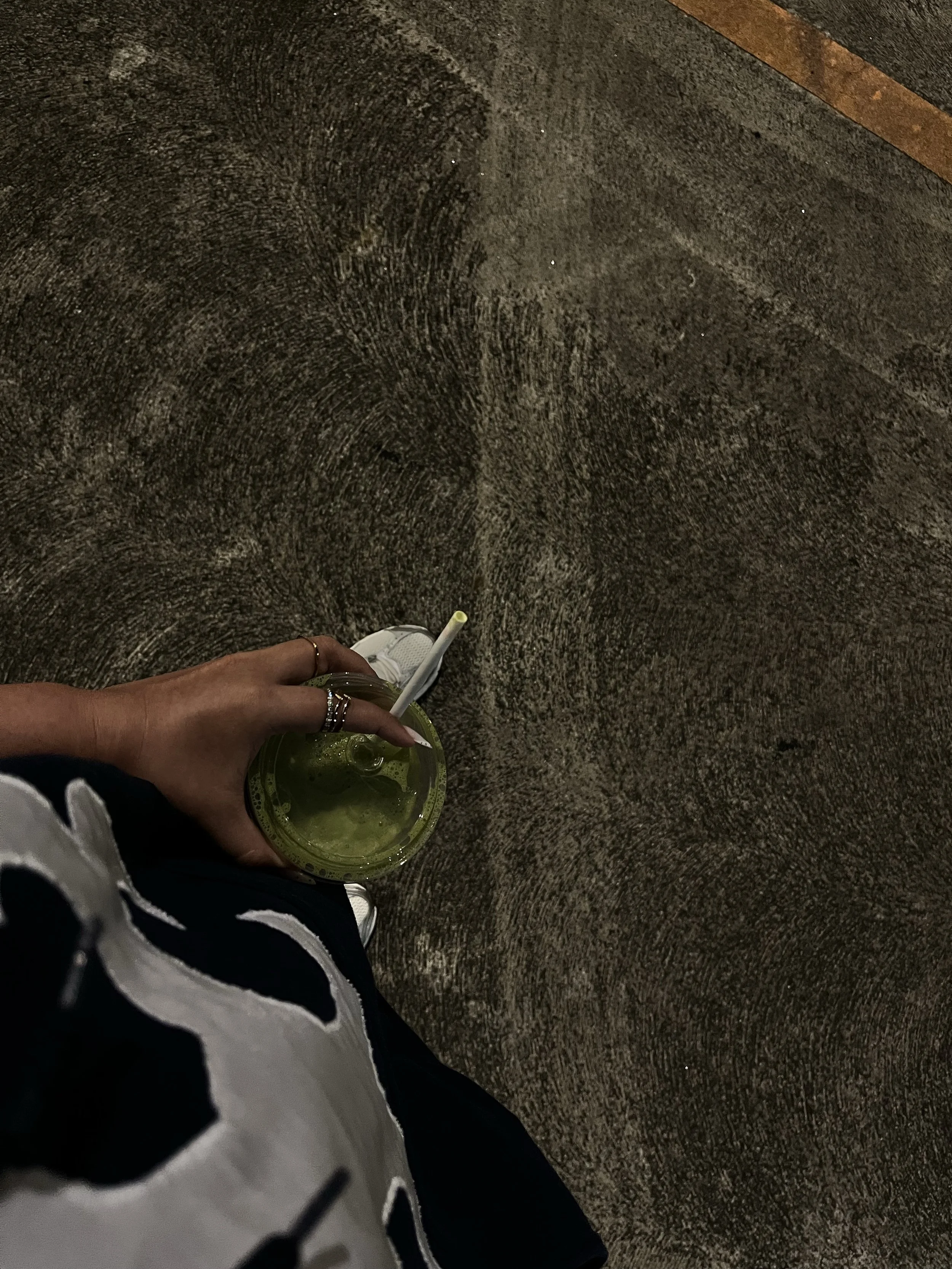
Skip the expensive studio lighting and polished editorial photoshoots. Today's biggest fashion trends are driven by raw, casual, under-a-minute clips recorded straight from a phone and shared on social media. You’ve probably been in this situation at some point, mindlessly scrolling TikTok at 1:00 AM, and suddenly you’re watching a person on your For You Page (FYP) style a basic outfit just to grab an overpriced drink in a plastic cup. You open the comments to see:
“Where is that vest from?”
“Name of white vest?”
“Link?”
“Where’s your skirt from?”
“Does anyone know where she got that top from?”
Then, the creator’s single pinned reply: “It’s on my LTK.”
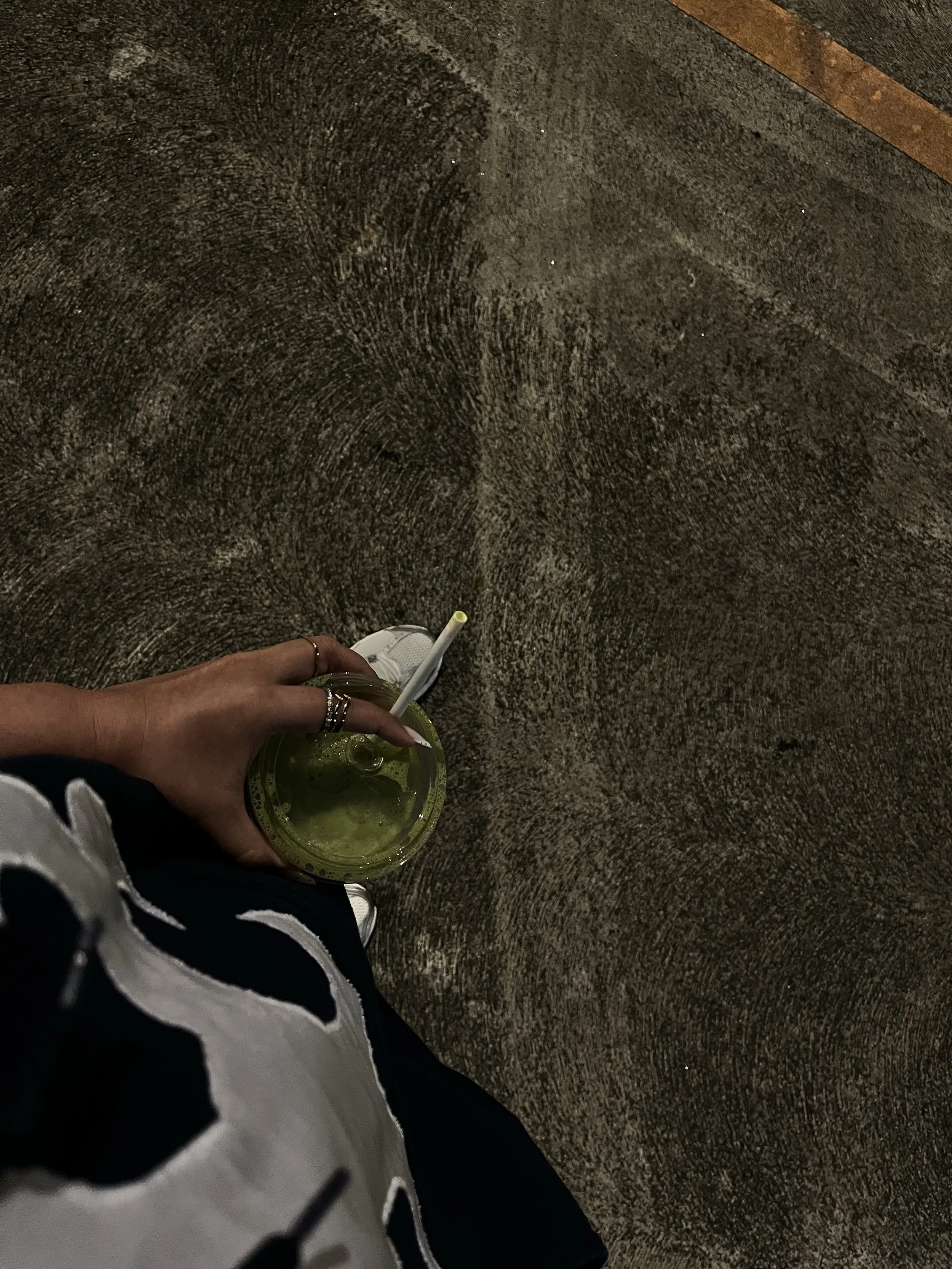
What do you wear to get a matcha?
‘What I Wear In A Day’ (WIWIAD), Get Ready With Me (GRWM), and quick ‘fit check’ videos have quietly taken over Gen Z’s fashion choices. But why are we ditching traditional fashion magazines to take style advice from random strangers on our TikTok and Instagram feeds? Turns out, there’s some psychological science working behind the scenes.
Rather than relying on traditional fashion magazines for styling inspiration, younger generations are steering towards repeated exposure to informal content. Peer-reviewed research highlights that the constant presence of modern fashion trends has been accelerated by digital media, with a link between younger generations choosing to utilise rapid fashion trends as a main tool for self-expression and social belonging.
According to research by Lawrence (2024), social media can significantly influence consumer preference and trend-setting style choices. Social media platforms like TikTok can facilitate a phenomenon known as ‘parasocial intimacy’. Seeing someone’s outfit choices within a familiar setting can create a feeling of closeness, and for Gen Z, this can feel particularly influential during times of isolation. For instance, during COVID-19, WIWIAD videos saw a sudden spike as a way of combating isolation through a casual way of interaction (Klug et al., 2023). Being stuck indoors left us craving genuine connection, and seeing someone get dressed in their own bedroom brought an instant sense of closeness.
Ever noticed how a micro-trend seems a bit strange at first, but after seeing it on your feed multiple times in as little as one week, you’re contemplating adding it to your cart? That’s driven by the ‘mere exposure effect’, a psychological phenomenon where repeated exposure to something can naturally increase our preference for it. On TikTok, algorithm-driven repetition means you don’t just see a trend once; you see 10+ different influencers wearing variations of it in a single afternoon.
Your brain transitions from:
“What is that?” → “Oh, I’ve seen that before.” → “Wait, that actually looks kinda cool.” → “I need it immediately.”
Repeated exposure to a trend on social media creates familiarity. For Gen Z, raw authenticity is often preferred, driven by the real connection felt behind the screens on social media, which signals trust and makes styles feel more relatable than heavily curated—not like an ad.
Videos often capture simple day-to-day outings like attending work, coffee shops, and carrying out simple errands. What stands out is how simple the format is, with comments asking questions specifically for outfit inspiration or general style-related inquiries. Fashion trends have circulated from these types of video alone with transition videos from loungewear to ‘clean, put together’ fits supporting the aesthetic of looking effortless whilst running errands.
Brands like ‘Bijoux De Mimi’ have showcased on TikTok what their Gen Z customers are wearing in casual street videos, using the familiar ‘fit check’ format to create a sense of authenticity around the brand.
Gen Z fashion also reflects on previous trends (e.g., the early 2000s) which can highlight the transition between what once was bright and patterned to the now ‘clean girl’ aesthetic clothing culture, bringing together on social media how we have watched Gen Z’s fashion style evolve over time.
Social media has a powerful impact on how we see fashion, through repeated exposure and creators that carry a sense of familiarity, WIWIAD videos illustrate how everyday outfits can simply influence wider trends with the possibility of what’s trending today becoming nostalgic for future generations to come.
About The Author
Francesca Francis is an ‘Integrative Mental Health Writer & Therapist’. With a BSc (Hons) in Counselling from the University of East London under her belt and a MSc in Child Development at University College London in progress, she blends real clinical experience with creative storytelling. Her main focus? Inner child healing, self-worth, and turning deep psychological insights into real-talk commentary that actually resonates. Check out her work on her website or connect with her on LinkedIn.
REFERENCES
Klug, D., Kaufman, G., & Evans, M. (2023). How TikTok served as a platform for young people to share and cope with lived COVID-19 experiences. MedieKultur: Journal of Media and Communication Research, 38(73), 152-170. https://doi.org/10.7146/mk.v38i73.128463
Lawrence, E. (2024). The Impact of Social Media on Fashion Trends: How Online Platforms Shape Consumer Preferences. [Unpublished manuscript]. https://www.researchgate.net/publication/386218074_The_Impact_of_Social_Media_on_Fashion_Trends_How_Online_Platforms_Shape_Consumer_Preferences

How Do You Feel About Face Filters?
GUYS, SHE’S NOT REAL.
"I feel so bad for girls growing up in this generation, they barely have a chance for good mental health or a positive body image."
—Online forum comment
"Just want to throw in that this is not only affecting young girls . . . I survived the 2000s fashion/body trends with my self esteem and self-love fully intact. How come I'm so susceptible to it now?! It's crazy."
—Another online forum comment
"How do I still look bad with the filter on?"
—TikTok user
What's this about then? Of course, it's something to do with TikTok (as usual). TikTok has introduced a new face filter named 'Bold Glamour' and it attempts to make your face look... computer generated. Face filters edit our appearance by using augmented reality. While face filters aren't something new, they're still used quite often today. But what does this mean for us? Let's take a deep dive into the psychology of 'face filters' and what they can do to our mental health.
You're exposed to face filters more than ever.
As soon as you unlock your mobile phone, turn on your TV, or log in to your laptop, it's constant bombardment from there on... We're exposed to filters more than ever before. Everything you see on the internet is edited to some point.
Face filters are more advanced than ever. They don't even glitch when you move any more. These days, people can't even tell the difference between what's reality and what's not... And it is a cause for concern. What does it mean for our mental health? Additionally, what does it mean for our privacy (i.e., Cowan et al., 2021)?
Unfortunately, it's really only the beginning for AI and augmented reality, and we'll be confronted with more and more that's yet to come. We spend a lot of time on screens leading us to become absorbed in self-beautification and seeking approval from others; failure to gain approval can have a negative impact on our self-esteem (Musarrat et al., 2022).
Brands are developing their own unique face filters to rather successfully engage consumers (Flavián et al., 2021), people on social media use filters on their picture and video posts such as makeup tutorials and endorsements, adverts use filter, television shows use filters, and YouTube videos use filters. In a Canadian study, Lavrence and Cambre (2020), found that people assume what they see on social media to be filtered, because it's the norm. The researchers also found that we use different filters for different social media platforms (Lavrence & Cambre, 2020).
We are motivated to use face filters for: ideal self-presentation, affiliation, enjoyment, convenience, social interaction, and creative content curation (Javornik et al., 2022).
Children these days grow up with these technological advancements, and it's all they know. Children as young as eight years of age are exposed to face filters despite of age restrictions to be able to access them. Pescott (2020) explored the views of primary school students (aged 10 and 11 years) in Wales on the use of face filters on social media platforms. In focus groups, the students were asked a set of questions such as:
"What are these filters for?"
"How do they make people look?"
"How are these different from how they look in real life?"
"Why do people use these filters?"
The students were engaged on the topic of filters and discussed two main reasons filters are used: 1) for entertainment; and 2) to look 'prettier'. A majority of male students used filters for entertainment. On the other hand, a majority of female students used filters to enhance and alter their appearance, also suggesting that people use filters because they want to look, prettier, unrecognisable, better, cover perceived flaws such as pores, scars, and acne, make certain changes to their facial features (i.e., contouring), and be perceived favourably by others. One student even wished to wear a filter in real life. 🥺 It is suggested that face filters can affect young children's body image, self-esteem, self-perception, and encourage them to engage in social comparison.
We're catching glimpses of our faces more often.
From the reflection on our phones or laptop screens, even our own mirror phone cases, to the sudden uptake of video meetings, and online lessons, we're paying even more attention than ever towards the way we look. When we interact with others in real life, we're not confronted to look at ourselves compared to when we're behind a screen.
In the United States, Ratan et al. (2022) carried out a study on 'virtual meeting (VM) fatigue', which is a result of negative self-focused attention when we're using video meeting platforms online. The study suggests that VM fatigue is related to facial dissatisfaction. Meetings are boring, and if you're bored you're going to focus on other things, especially if you're online and there's no one to stop you. Your eyes glance for something interesting and oh... What's that in the box at the corner of your screen right in front of your face? It's you of course. You start asking yourself questions like, "Do I look like this in real?" or "My face isn't symmetrical?". Faces aren't symmetrical by the way. In a sample of 609 adults, VM fatigue was higher for women than for men across the ethnicities studied. Using face filters and beauty 'enhancers' during VMs are not likely to reduce negative self-focused attention and is only likely to exacerbate it.
Interestingly, Hong et al. (2020) found that using filters on selfies on social media (e.g., Instagram) was associated with fewer likes received from other social media users.
We're encouraged to believe that something is wrong with our appearance.
As a society, we're driven to do what others do. It's how we make decisions about what we should and shouldn't do. Unfortunately that means taking part in trends. Trends come and go. It's all about FOMO. You see a new filter being used on TikTok so you've got to use it too (just to give it a try).
How we're 'supposed' to look is getting a little too confusing. There's been an increase in YouTube channels including actual plastic surgeons that constructively discuss cosmetic surgeries and procedures of celebrities and influencers, catfishing, self-love, useful techniques and advice, and unrealistic beauty standards. However, there's also been an increase in 'aesthetic' channels that tell you that you need to change your appearance ('looksmaxing') in order to be successful in life (or you straight up, have no hope).
Filters are based on (a) society's 'idealised and unrealistic beauty standards' (Tremblay et al., 2021). Face filters have the ability to filter our skin, whiten our teeth, reshape our jawline, and enlarge/lessen our features. It's the norm to use a filter now, whether it's stated explicitly or not. The use of face filters and photo editing is not only for magazines and celebrities any more. It's accessible for nearly everyone. With these filters we feel that we don't look good enough or we don't fit in, so getting cosmetic surgery seems like a good option to explore. What is ridiculous is that beauty standards change quite often, and different cultures have different beauty standards. We're all different, and what you think might look good on someone, might not look good on someone else.
The use of face filters has been shown to be positively linked to social motivations of cosmetic surgery acceptance (e.g., perceived social benefits) and consideration of cosmetic surgery amongst teens (Maes & de Lenne, 2022).
“You are never going to meet this culture’s beauty standard. If we all started meeting the standard, the standard would just be changed.”
—Engeln cited in Brucculieri (2018)
According to a study by Hjetland et al. (2021), teens from high schools in Norway shared that social media allows people to compare themselves to others, triggering negative emotions, and also that people only portray themselves in a positive, one-sided way. We use filters to manage our self-presentation and we only see the positive, not the negative. What is more, female participants mentioned that the use of filters affects the way men think women should look. Filters made the teens more aware of their appearance, perceived flaws, and gave them thoughts towards what they could look like instead. Similarly, guilt and insecurity have been found in relation to face filters too (Barker, 2020).
In another study by Abbas and Dodeen (2022), it was found that Arab females who used Snapchat beauty filters had a high tendency towards body dysmorphic features. The relationship between body dysmorphic features and quality of life changes with age, education, and social status. Face filters foster new forms of body dysmorphia (Rodner et al., 2022).
Habib et al. (2022) comment that face filters are changing young women's attitudes. When deciding to edit photos, young women compare themselves to their previous photos to explore perceived imperfections they want to alter, which in turn causes them aggravation, unhappiness, and negative self-esteem. What is more, the stress of not being able to meet unreasonable expectations of one's appearance (due to filters), leads to low mood and appearance dissatisfaction.
If you're feeling negative about face filters, here are some things you can do.
1. Filters have become the norm, so assume that what you see in the media is filtered, because most likely it is.
2. Ask yourself who cares? No, really. Who really cares? Why do you care? What benefit do you get consuming or posting this certain content? Does it make you question yourself? Could you be doing something better with your time? Do you seek validation? You realise that there's a lot of things to explore in life when you separate yourself from social media trends.
3. Educate yourself and spread awareness (politely). Have discussions with others, learn their points of view, be the change you want to see.
4. Remember that there's more to life than how you and others perceive your looks. Attraction is subjective! Beauty standards are ridiculous!
5. Next time you post face filter content on social media, remember that companies use your data to further design their face filters.
6. Limit your time on social media. If you don't post on or use social media constantly, you don't have to constantly think about how you look, how others look, what other people might think, whether you'll get comments, etc. Bliss. Take up a new hobby, listen to some music, or go and take a walk.
7. Tell the algorithm to suck it (Don't watch content that makes you unhappy). Algorithms are designed to keep us engaged on social media. Repeatedly watching certain types of content will only let the algorithm know what keeps you hooked, no matter what it is. So, if you keep watching videos that make you unhappy, it will only suggest more of these videos. You can clear your search or watch history, clear the app's cache, delete your account and start a new one only watching content that doesn't make you feel upset, or dislike content to prevent and limit similar posts from showing up.
So there you have it.
Abbas, L. & Dodeen, H. (2022). Body dysmorphic features among Snapchat users of “Beauty-Retouching of Selfies” and its relationship with quality of life. Media Asia, 49(3), 196-212. https://doi.org/10.1080/01296612.2021.2013065
Barker, J. (2020). Making-up on mobile: The pretty filters and ugly implications of Snapchat. Fashion, Style & Popular Culture, 7, 207-221.
Brucculieri, J. (2018, Feb 22). 'Snapchat Dysmorphia' Points To A Troubling New Trend In Plastic Surgery. Huffington Post. https://www.huffingtonpost.co.uk/entry/snapchat-dysmorphia_n_5a8d8168e4b0273053a680f6
Cowan, K., Javornik, A., & Jiang, P. (2021). Privacy concerns when using augmented reality face filters? explaining why and when use avoidance occurs. Psychology and Marketing, 38, 1799-1813. https://doi.org/10.1002/mar.21576
Flavián, C., Ibáñez-Sánchez, S. & Orús, C. (2021). User Responses Towards Augmented Reality Face Filters: Implications for Social Media and Brands. Progress in IS, in Augmented Reality and Virtual Reality, 29-42. https://doi.org/10.1007/978-3-030-68086-2_3
Habib, A., Ali, T., Nazir, Z., & Mahfooz, A. (2022). Snapchat filters changing young women's attitudes. Annals of Medicine and Surgery, 82. https://doi.org/10.1016/j.amsu.2022.104668
Hjetland, G.J., Schønning, V., Hella, R.T., Veseth, M., & Skogen, J. C. (2021). How do Norwegian adolescents experience the role of social media in relation to mental health and well-being: a qualitative study. BMC Psychology, 9(78). https://doi.org/10.1186/s40359-021-00582-x
Hong, S., Jahng, M. R., Lee, N., & Wise, K. R. (2020). Do you filter who you are?: Excessive self-presentation, social cues, and user evaluations of Instagram selfies. Computers in Human Behaviour, 104, 106159. https://doi.org/10.1016/j.chb.2019.106159
Javornik, A., Marder, B., Barhorst, J. B., McLean, G., Rogers, Y., Marshall, P., & Warlop, L. (2022). ‘What lies behind the filter?’ Uncovering the motivations for using augmented reality (AR) face filters on social media and their effect on well-being. Computers in Human Behaviour, 128, 107126. https://doi.org/10.1016/j.chb.2021.107126
Lavrence, C. & Cambre, C. (2020). “Do I Look Like My Selfie?”: Filters and the Digital-Forensic Gaze. Social Media + Society, 6(4). https://doi.org/10.1177/2056305120955182
Maes, C. & de Lenne, O. (2022). Filters and fillers: Belgian adolescents’ filter use on social media and the acceptance of cosmetic surgery. Journal of Children and Media, 16(4), 587-605. https://doi.org/10.1080/17482798.2022.2079696
Musarrat, R., Ahmed S., Munir, F., Riaz, S., & Hayat, N. (2022). Digital Narcissism, Self-Esteem And Self-Objectification Among Snapchat Vs. Facebook Users. Journal of Positive School Psychology, 6(9), 3128-3141.
Pescott, C. K. (2020). “I Wish I was Wearing a Filter Right Now”: An Exploration of Identity Formation and Subjectivity of 10 and 11 Year Olds’ Social Media Use. Social Media + Society, 6(4). https://doi.org/10.1177/2056305120965155
Ratan, R., Miller, D. B. & Jeremy N. Bailenson, J. N. (2022). Facial Appearance Dissatisfaction Explains Differences in Zoom Fatigue. Cyberpsychology, Behaviour, and Social Networking, 124-129. http://doi.org/10.1089/cyber.2021.0112
Rodner, V., Goode, A. & Burns, Z. (2022). “Is it all just lip service?”: on Instagram and the normalisation of the cosmetic servicescape. Journal of Services Marketing, 36(1), 44-58. https://doi.org/10.1108/JSM-12-2020-0506
Tremblay, S. C., Tremblay, S. E., & Poirier, P. (2021). From filters to fillers: an active inference approach to body image distortion in the selfie era. AI & Society, 36, 33-48. https://doi.org/10.1007/s00146-020-01015-w