
ARTICLES
Your FYP’s Dictating Your Outfit
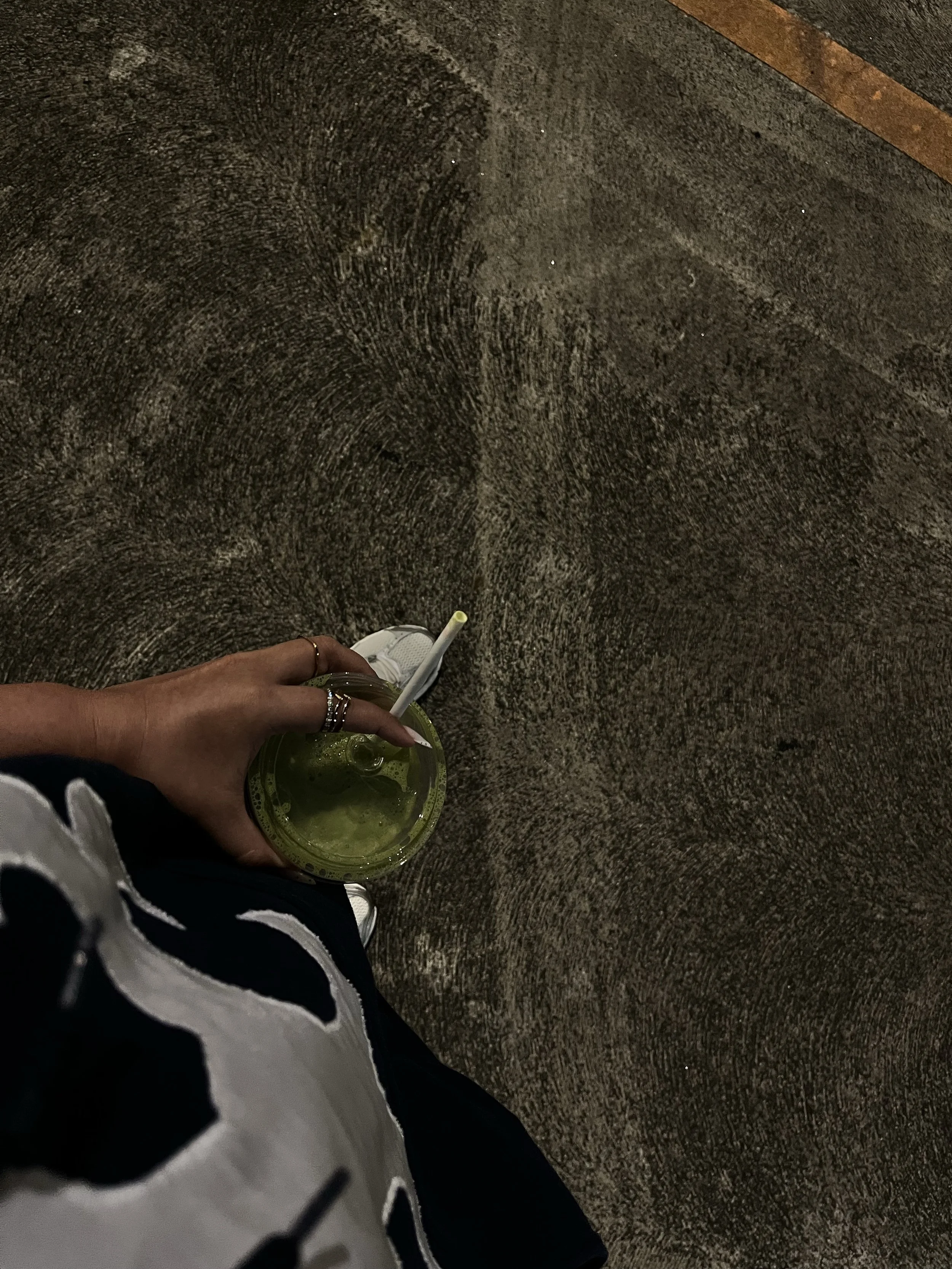
Skip the expensive studio lighting and polished editorial photoshoots. Today's biggest fashion trends are driven by raw, casual, under-a-minute clips recorded straight from a phone and shared on social media. You’ve probably been in this situation at some point, mindlessly scrolling TikTok at 1:00 AM, and suddenly you’re watching a person on your For You Page (FYP) style a basic outfit just to grab an overpriced drink in a plastic cup. You open the comments to see:
“Where is that vest from?”
“Name of white vest?”
“Link?”
“Where’s your skirt from?”
“Does anyone know where she got that top from?”
Then, the creator’s single pinned reply: “It’s on my LTK.”
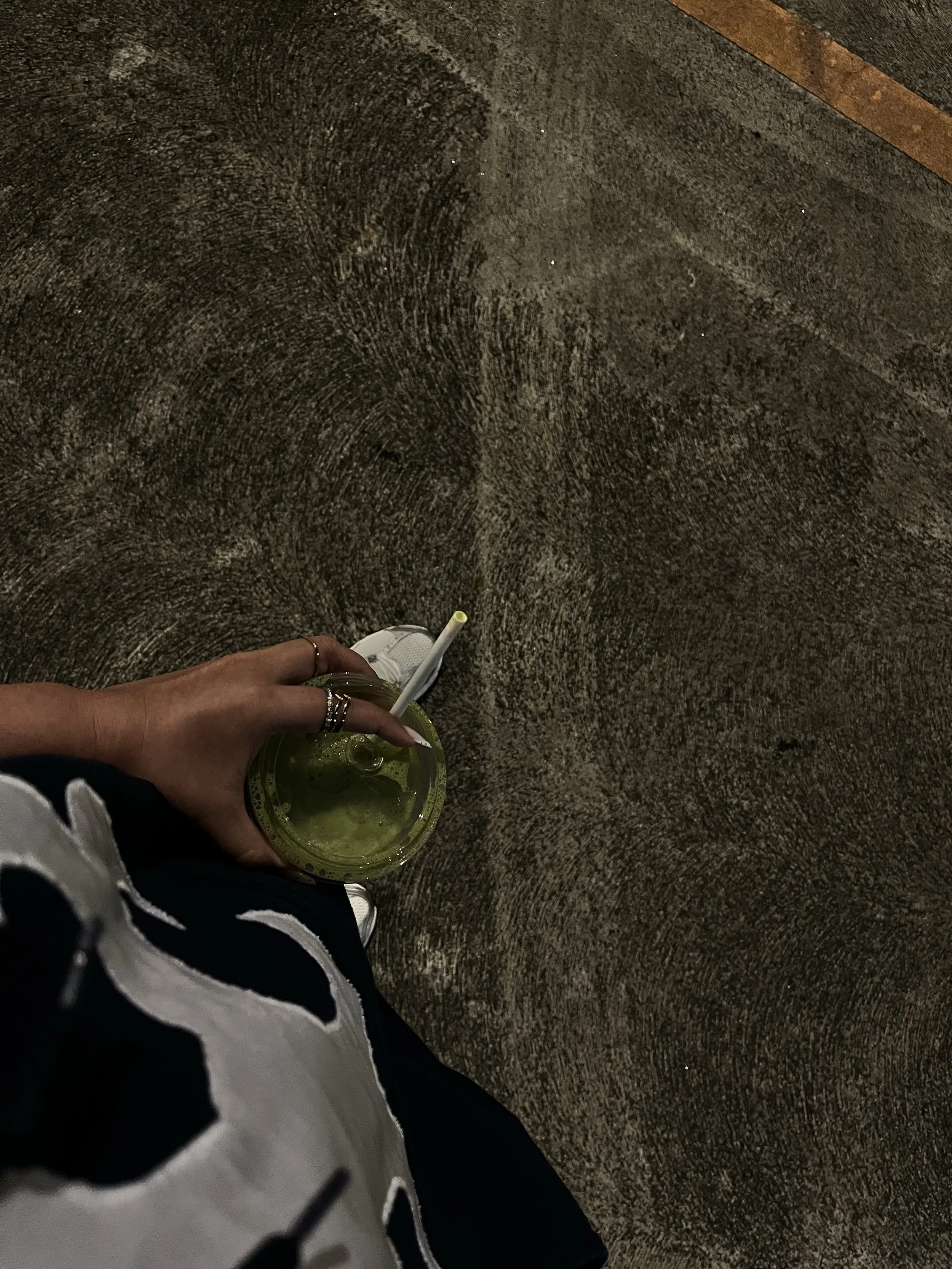
What do you wear to get a matcha?
‘What I Wear In A Day’ (WIWIAD), Get Ready With Me (GRWM), and quick ‘fit check’ videos have quietly taken over Gen Z’s fashion choices. But why are we ditching traditional fashion magazines to take style advice from random strangers on our TikTok and Instagram feeds? Turns out, there’s some psychological science working behind the scenes.
Rather than relying on traditional fashion magazines for styling inspiration, younger generations are steering towards repeated exposure to informal content. Peer-reviewed research highlights that the constant presence of modern fashion trends has been accelerated by digital media, with a link between younger generations choosing to utilise rapid fashion trends as a main tool for self-expression and social belonging.
According to research by Lawrence (2024), social media can significantly influence consumer preference and trend-setting style choices. Social media platforms like TikTok can facilitate a phenomenon known as ‘parasocial intimacy’. Seeing someone’s outfit choices within a familiar setting can create a feeling of closeness, and for Gen Z, this can feel particularly influential during times of isolation. For instance, during COVID-19, WIWIAD videos saw a sudden spike as a way of combating isolation through a casual way of interaction (Klug et al., 2023). Being stuck indoors left us craving genuine connection, and seeing someone get dressed in their own bedroom brought an instant sense of closeness.
Ever noticed how a micro-trend seems a bit strange at first, but after seeing it on your feed multiple times in as little as one week, you’re contemplating adding it to your cart? That’s driven by the ‘mere exposure effect’, a psychological phenomenon where repeated exposure to something can naturally increase our preference for it. On TikTok, algorithm-driven repetition means you don’t just see a trend once; you see 10+ different influencers wearing variations of it in a single afternoon.
Your brain transitions from:
“What is that?” → “Oh, I’ve seen that before.” → “Wait, that actually looks kinda cool.” → “I need it immediately.”
Repeated exposure to a trend on social media creates familiarity. For Gen Z, raw authenticity is often preferred, driven by the real connection felt behind the screens on social media, which signals trust and makes styles feel more relatable than heavily curated—not like an ad.
Videos often capture simple day-to-day outings like attending work, coffee shops, and carrying out simple errands. What stands out is how simple the format is, with comments asking questions specifically for outfit inspiration or general style-related inquiries. Fashion trends have circulated from these types of video alone with transition videos from loungewear to ‘clean, put together’ fits supporting the aesthetic of looking effortless whilst running errands.
Brands like ‘Bijoux De Mimi’ have showcased on TikTok what their Gen Z customers are wearing in casual street videos, using the familiar ‘fit check’ format to create a sense of authenticity around the brand.
Gen Z fashion also reflects on previous trends (e.g., the early 2000s) which can highlight the transition between what once was bright and patterned to the now ‘clean girl’ aesthetic clothing culture, bringing together on social media how we have watched Gen Z’s fashion style evolve over time.
Social media has a powerful impact on how we see fashion, through repeated exposure and creators that carry a sense of familiarity, WIWIAD videos illustrate how everyday outfits can simply influence wider trends with the possibility of what’s trending today becoming nostalgic for future generations to come.
About The Author
Francesca Francis is an ‘Integrative Mental Health Writer & Therapist’. With a BSc (Hons) in Counselling from the University of East London under her belt and a MSc in Child Development at University College London in progress, she blends real clinical experience with creative storytelling. Her main focus? Inner child healing, self-worth, and turning deep psychological insights into real-talk commentary that actually resonates. Check out her work on her website or connect with her on LinkedIn.
REFERENCES
Klug, D., Kaufman, G., & Evans, M. (2023). How TikTok served as a platform for young people to share and cope with lived COVID-19 experiences. MedieKultur: Journal of Media and Communication Research, 38(73), 152-170. https://doi.org/10.7146/mk.v38i73.128463
Lawrence, E. (2024). The Impact of Social Media on Fashion Trends: How Online Platforms Shape Consumer Preferences. [Unpublished manuscript]. https://www.researchgate.net/publication/386218074_The_Impact_of_Social_Media_on_Fashion_Trends_How_Online_Platforms_Shape_Consumer_Preferences
2025 Digital Journal
Did you say you're looking for a new digital journal to try out in 2025? Say no more.
It's 2025!
You like?
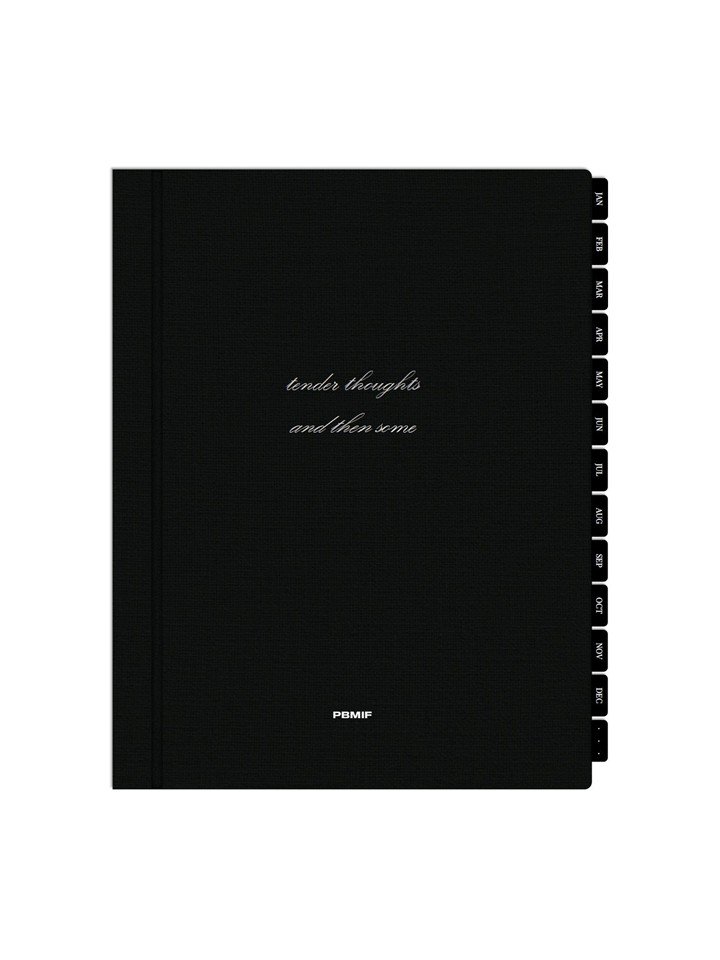
PBMIF's 2025 digital journal has launched. Available as a PDF document, this journal can be used on any device using your preferred notes application.
After your nice feedback on the 2024 digital journal (thank you), I thought I'd make another one for 2025.
Yes, it's free.
WHAT'S NEW?
What's new this year?
The journal has an entirely new look. In this edition tabs/dividers and textures have been added, it looks more authentic, and it's more straightforward. It has a bit of a romantic feel - French menu-esque... It's designed for you to get to know you, better.
One major difference is that activities are now blended seamlessly into the journal; large chunks of text and instructions have been replaced by simple sentences. The rigid structure of the last journal was quite boring and I was never motivated to complete it myself. It's more customisable this time. By adding tab dividers, you're able to drag pages to whichever tab you want. The pages have an added texture to appear paper-like. I've removed page numbers. As this journal was intended for you to move pages around and add more (i.e., duplicate them), it didn't quite make sense to add page numbers this time because they'd be all over the place!
Taking these changes into consideration, I hope you find this journal more interesting to use.
JOURNALLING - DO WHAT'S BEST FOR YOU!
There are no rules when it comes to journalling. You can journal whenever you feel like it. Some people like to journal at the end of the week and some like to journal instead of scrolling through social media. Journalling shouldn't be a chore where you feel obliged to track your every waking moment.
Included in this PDF template:
Calendar;
Monthly tabs with hyperlinks;
100+ questions;
Vision board; and
Blank template pages.
WHAT ARE THE BENEFITS OF JOURNALLING?
Have you tried journalling before? (I can't commit to spelling journaling like this). Journalling has been shown to have many benefits including increased life satisfaction.
If you've never journalled before, it can seem quite overwhelming. What are you meant to write? Where can you find the time to journal? How do you know which app to use? What pen colour do you choose? PBMIF's 2025 digital journal has a clean layout; it's designed to not be overwhelming. It's simple and easy to use.
Journalling is about finding out what you like to write about; it's personal to your values, interests, and life experiences (Huston et al., 2024). You don't need to adhere to what others do with their journals. What you find comfortable and pleasurable is the best approach for you.
Gratitude and gratitude journalling have been shown to positively impact psychological wellbeing and affective functioning, while also decreasing negative affect and stress (Cauble & Downs, 2022; Hall et al., 2024; Mohamed et al., 2023).
A recent study (McKay et al., 2024), published in Mindfulness, found that most participants who engaged in a 91-day self-compassion journalling exercise reported positive feedback and beneficial impacts on self-kindness, common humanity, and mindfulness. A journal is a low-cost and accessible way to improve self-compassion and wellbeing.
What is more, the beauty of digital journalling is that it's editable unlike pen to paper.
If you'd like to read more about the benefits of journalling, you can read this article.
You may find the file below. It's a PDF so it can be used on any notes app that allows PDF import (i.e., Goodnotes, Samsung Notes, etc.).
Thank you for your support, please do leave a comment, and even share your experience with the journal if you'd like to! I wish you a lovely 2025. Keep a lookout for more free downloadable resources.
2025 Digital Journal (Free PDF Download)
N.B. Hyperlinks only work in reader mode.
You may want to read...
Hall, A. H., Bache-Wiig, G. & White, K. M. (2024). Exploring the Impact of Gratitude Practice as a Protective Factor for Young Children. Early Childhood Education Journal. https://doi.org/10.1007/s10643-023-01623-3
Huston, G. E., Law, K. H., Teague, S., Pardon, M., Muller, J. L., Jackson, B., & Dimmock, J. A. (2024). Understanding and optimising gratitude interventions: the right methods for the right people at the right time. Psychology & Health, 1–17. https://doi.org/10.1080/08870446.2024.2336042
McKay, R. C., Zottl, L., & Jung, M. E. (2024). Becoming Kinder to Yourself: Evaluating a 91-Day Self-Compassion Journal. Mindfulness. https://doi.org/10.1007/s12671-024-02484-6
Mohamed, N. H., Beckstein, A., Winship, G., Ashraf Khan Mou, T., Pang, N. T. P., & Relojo-Howell, D. (2023). Effects of self-expressive writing as a therapeutic method to relieve stress among university students. Journal of Poetry Therapy, 36(3), 243–255. https://doi.org/10.1080/08893675.2023.2174678
Skrzelinska, J., Ferreira, J. A., Linharelhos, M., Aguiar, E., & Matos, M. (2024). The impact of gratitude practice on well-being and mental health in post-COVID times among Portuguese adults. Current Psychology, 43, 34863–34874. https://doi.org/10.1007/s12144-024-06974-7
Tolcher, K., Cauble, M., & Downs, A. (2022). Evaluating the effects of gratitude interventions on college student well-being. Journal of American College Health, 72(5), 1321–1325. https://doi.org/10.1080/07448481.2022.2076096

The Psychology of Rings
MA’AM THE RING STACK IS GIVING
Hailey Bieber’s ring stack
Lately, Psychology, But Make It Fashion's Instagram explore page has been covered in rings (not the doorbell...). I'm talking about engagement ring posts, wedding bands, fashion rings, jewellery ads where the models gaze at each other rather unnaturally, high-end luxury rings, manicure posts, those flower DIY rings with the beads... Lovely stuff.
I thought I'd make a little post taking a little look into the psychology of rings. When we think of rings, we think of the accessory that people wear on their fingers. (Yes, people can wear rings on their toes too). Rings can express our style, inform people of our relationship status, status in society, culture, values, where we like to shop, and how we'd like to be seen. Above all other jewellery, rings are most commonly associated with sentimental value - eternity, marriage, a promise to the self, can be passed down through generations, solidify our relationships, be one-of-a-kind, and hold (happy) memories. Here are a few academic journal articles that you might find interesting.
WHAT TYPE OF ENGAGEMENT RING DO YOU PREFER?
It's possible that women's preferences for engagement rings might be influenced by their perception of potential partners. Research carried out by Locke et al. (2020) suggests that when women believe they have a wider range of romantic options (mate abundance: many people that they'd think they can date), they tend to value larger and more expensive engagement rings. Why might this be the case though? This finding aligns with evolutionary psychology ideas about mate selection, where cues like ring size and cost might signal a man's commitment and ability to provide. This finding also highlights competition. Commonly seen in the animal kingdom, the potential mate who wins the fight, has the nicest feathers, nicest horn, is the tallest, has the sparkliest eyes, etc., usually wins. It's important to note that this is a single study, and factors like personal taste and cultural background obviously play a role in shaping these preferences. However, the findings offer a glimpse into how our perception of choice can influence personal decisions like engagement rings.
On the same note, many years ago, Griskevicius and colleagues (2012) explored how the ratio of men to women (called sex ratio) in a population influenced how men approached their finances. The researchers suggest that when men outweigh women, men tend to prioritise spending over saving. The evolutionary explanation for this behaviour is that when in situations where men face tougher competition for mates, they might be more inclined to spend on things that they think could enhance their attractiveness – Clothes, dinner, holidays, gifts... This focus on short-term gains (and maybe reckless decisions) comes at the expense of long-term financial planning. Our subconscious desires, like the drive to find a partner, can play a significant role in how we handle money.
RINGS MAY BOOST OUR SELF-ESTEEM.
Researchers in Japan, Yokoi et al. (2017) conducted a study to see if wearing rings could improve behavioural and psychological symptoms experienced by female dementia patients. Dementia is a a group of related symptoms associated with an ongoing decline of brain functioning.
The researchers observed how the patients responded to wearing rings and the compliments they received from caregivers about the rings. The researchers thought that the rings would give the patients a self-esteem boost by reminding them of their femininity and attractiveness, leading to a decrease in negative emotions (i.e., irritability and anxiety). The researchers observed some positive changes in mood associated with wearing rings and receiving compliments.
DO WEDDING RINGS MAKE MEN MORE ATTRACTIVE?
Many men (on Reddit) these days have shared that when they wear their wedding ring, they feel that they get a lot more interest from women than when they don't. When a man wears a wedding ring, it can suggest that he has desirable qualities. It must be said that many people who are married may choose to not wear a ring, and wearing a ring on your ring finger does not necessarily mean it's a wedding/an engagement ring. Back in 2003, researchers Uller and Johansson studied the interactions between women and men, with some men wearing wedding rings and others not. It was found that the presence or absence of a ring didn't influence the women's perception of the men's attractiveness or their potential as a partner. This study highlights the multifaceted nature of human mate selection, where factors beyond marital status and jewellery wearing exist. Considering that this study is 20+ years old, these findings may not be the case today.
DOES RING COST HAVE ANYTHING TO DO WITH HOW LONG A MARRIAGE LASTS?
Francis-Tan and Mialon (2015) investigated the relationship between wedding expenses and how long marriages last. The researchers found that spending a lot on weddings and engagement rings was linked to marriages that didn't last as long. There was no link between a less expensive wedding and a short marriage, but spending less than $1000 ≈ £745-760 on a ring was associated with an increase in divorces among women. The study suggests that focusing on the ceremony itself less and building a strong foundation for a marriage might be more important for long-term success.
Francis-Tan, A. & Mialon, H.M. (2015). A DIAMOND IS FOREVER AND OTHER FAIRY TALES: THE RELATIONSHIP BETWEEN WEDDING EXPENSES AND MARRIAGE DURATION. Econ Inq, 53, 1919-1930. https://doi.org/10.1111/ecin.12206
Griskevicius, V., Tybur, J. M., Ackerman, J. M., Delton, A. W., Robertson, T. E., & White, A. E. (2012). The financial consequences of too many men: Sex ratio effects on saving, borrowing, and spending. Journal of Personality and Social Psychology, 102(1), 69–80. https://doi.org/10.1037/a0024761
Locke, A., Desrochers, J., & Arnocky, S. (2020). Induced Mate Abundance Increases Women’s Expectations for Engagement Ring Size and Cost. Evolutionary Psychological Science 6, 188–194. https://doi.org/10.1007/s40806-019-00214-z
Uller, T. & Johansson, L. C. (2003). Human mate choice and the wedding ring effect : Are married men more attractive? Human nature, 14(3), 267–276. https://doi.org/10.1007/s12110-003-1006-0
Yokoi, T., Okamura, H., Yamamoto, T., Watanabe, K., Yokoi, S., Atae, H., Ueda, M., Kuwayama, T., Sakamoto, S., Tomino, S., Fujii, H., Honda, T., Morita, T., Yukawa, T., & Harada, N. (2017). Effect of wearing fingers rings on the behavioral and psychological symptoms of dementia: An exploratory study. SAGE open medicine, 5. https://doi.org/10.1177/2050312117726196

Does Hair Make Us Attractive?
The hair care market in 2023 is massive... indeed. But we're not here today to give you statistics about the hair care market. We're here to tell you about a couple of (recent) psychology studies that can give us an insight as to how a woman's perceived attractiveness (in Western culture) is influenced by her hair (according to research conducted in the West).
Been hair, done that.
Diameter, density, and style of hair.
In three experiments, Fink et al. (2016) explored how diameter, density, and style of hair influenced women's perceptions of age, health, and attractiveness.
Female participants from a university in central Germany looked at computer generated images of Caucasian women with different hair (only their hair from behind and one shoulder were visible), and rated the images on age, health, and attractiveness.
The results suggested that straight hair and copper coloured hair were seen as younger, and blonde hair was seen as older.
Thick hair was seen as less healthy, and less attractive than thin hair.
Straight hair was seen as healthier, and more attractive than wavy hair.
Copper and brown hair were seen as healthier, and more attractive than blonde hair.
The original density (defined as 100% hair fibre counts in Caucasians) image, was seen as the youngest, healthiest, and most attractive.
Long hair was seen as the most attractive.
Hair style had the strongest effect on visual perception.
Hair colour (and length).
Matz and Hinsz (2018) investigated how women's hair colour and length influenced males' judgements about women's age, health, attractiveness, relationship, and parenting capability.
Male participants from a university in the USA were asked to look at computer generated images of Caucasian women with different hair colours and lengths (only their hair from behind and one shoulder were visible), and were then asked to answer questions about the women's age, health, attractiveness, relationship, and parenting capability.
Lighter hair was found to be associated with youth, health, playfulness, and attractiveness, (and therefore positive relationship and parenting potential).
Longer hair was found to be associated with youth, but reduced parenting potential.
It is suggested that young women change their hair colour to meet stereotypical Westernised conceptions of beauty.
Location, location, location.
Wortham et al. (2018) decided to study men and women on their preference of hair colour on women in line with the interest of evolutionary psychology theories predicting that individuals are attracted to hair colours both familiar to them, and rare for their culture.
The study, based in Florida, USA, asked participants to report their own, their parents', and their significant other's hair colour, along with their geographic region. Their hair colour preferences were surveyed.
Due to familiarity with hair colours present in different populations, geographic location was predicted to influence participants' preferences.
It was found that male and female participants both preferred brown hair, then blonde hair, and lastly red hair.
Male participants' choice of hair colour was consistent across geographic regions, however female participants varied their choice dependent on which geographic region they originated.
Red hair was preferred more frequently than expected based on the prevalence of redheads in the studied population (both men and women preferred red hair 6% of the time, while only 3% of the female population were redheads).
Take the results of these studies with a pinch of salt because they're ethnocentric and based on small sample sizes; their findings shouldn't really be generalised to other cultures. Also, not only hair plays a role in how we are perceived by others, and of course, attraction is subjective.
Fink, B., Hufschmidt, C., Hirn, T., Will, S., McKelvey, G., & Lankhof, J. (2016). Age, Health and Attractiveness Perception of Virtual (Rendered) Human Hair. Frontiers in Psychology, 7, 1893. https://doi.org/10.3389/fpsyg.2016.01893
Matz, D. C. & Hinsz, V. B. (2018). Women's hair as a cue to desired relationship and parenting characteristics. The Journal of Social Psychology, 158(5), 558-573. https://doi.org/10.1080/00224545.2017.1395791
Wortham, J., Miller, A., & Delvescovo, D. (2018). Male and female hair colour preferences: Influences of familiarity, geographic region of origin, and environment on mate attraction in University of Tampa students. Florida Scientist, 81(1), 33-54. https://www.jstor.org/stable/26477962

How Do You Feel About Face Filters?
GUYS, SHE’S NOT REAL.
"I feel so bad for girls growing up in this generation, they barely have a chance for good mental health or a positive body image."
—Online forum comment
"Just want to throw in that this is not only affecting young girls . . . I survived the 2000s fashion/body trends with my self esteem and self-love fully intact. How come I'm so susceptible to it now?! It's crazy."
—Another online forum comment
"How do I still look bad with the filter on?"
—TikTok user
What's this about then? Of course, it's something to do with TikTok (as usual). TikTok has introduced a new face filter named 'Bold Glamour' and it attempts to make your face look... computer generated. Face filters edit our appearance by using augmented reality. While face filters aren't something new, they're still used quite often today. But what does this mean for us? Let's take a deep dive into the psychology of 'face filters' and what they can do to our mental health.
You're exposed to face filters more than ever.
As soon as you unlock your mobile phone, turn on your TV, or log in to your laptop, it's constant bombardment from there on... We're exposed to filters more than ever before. Everything you see on the internet is edited to some point.
Face filters are more advanced than ever. They don't even glitch when you move any more. These days, people can't even tell the difference between what's reality and what's not... And it is a cause for concern. What does it mean for our mental health? Additionally, what does it mean for our privacy (i.e., Cowan et al., 2021)?
Unfortunately, it's really only the beginning for AI and augmented reality, and we'll be confronted with more and more that's yet to come. We spend a lot of time on screens leading us to become absorbed in self-beautification and seeking approval from others; failure to gain approval can have a negative impact on our self-esteem (Musarrat et al., 2022).
Brands are developing their own unique face filters to rather successfully engage consumers (Flavián et al., 2021), people on social media use filters on their picture and video posts such as makeup tutorials and endorsements, adverts use filter, television shows use filters, and YouTube videos use filters. In a Canadian study, Lavrence and Cambre (2020), found that people assume what they see on social media to be filtered, because it's the norm. The researchers also found that we use different filters for different social media platforms (Lavrence & Cambre, 2020).
We are motivated to use face filters for: ideal self-presentation, affiliation, enjoyment, convenience, social interaction, and creative content curation (Javornik et al., 2022).
Children these days grow up with these technological advancements, and it's all they know. Children as young as eight years of age are exposed to face filters despite of age restrictions to be able to access them. Pescott (2020) explored the views of primary school students (aged 10 and 11 years) in Wales on the use of face filters on social media platforms. In focus groups, the students were asked a set of questions such as:
"What are these filters for?"
"How do they make people look?"
"How are these different from how they look in real life?"
"Why do people use these filters?"
The students were engaged on the topic of filters and discussed two main reasons filters are used: 1) for entertainment; and 2) to look 'prettier'. A majority of male students used filters for entertainment. On the other hand, a majority of female students used filters to enhance and alter their appearance, also suggesting that people use filters because they want to look, prettier, unrecognisable, better, cover perceived flaws such as pores, scars, and acne, make certain changes to their facial features (i.e., contouring), and be perceived favourably by others. One student even wished to wear a filter in real life. 🥺 It is suggested that face filters can affect young children's body image, self-esteem, self-perception, and encourage them to engage in social comparison.
We're catching glimpses of our faces more often.
From the reflection on our phones or laptop screens, even our own mirror phone cases, to the sudden uptake of video meetings, and online lessons, we're paying even more attention than ever towards the way we look. When we interact with others in real life, we're not confronted to look at ourselves compared to when we're behind a screen.
In the United States, Ratan et al. (2022) carried out a study on 'virtual meeting (VM) fatigue', which is a result of negative self-focused attention when we're using video meeting platforms online. The study suggests that VM fatigue is related to facial dissatisfaction. Meetings are boring, and if you're bored you're going to focus on other things, especially if you're online and there's no one to stop you. Your eyes glance for something interesting and oh... What's that in the box at the corner of your screen right in front of your face? It's you of course. You start asking yourself questions like, "Do I look like this in real?" or "My face isn't symmetrical?". Faces aren't symmetrical by the way. In a sample of 609 adults, VM fatigue was higher for women than for men across the ethnicities studied. Using face filters and beauty 'enhancers' during VMs are not likely to reduce negative self-focused attention and is only likely to exacerbate it.
Interestingly, Hong et al. (2020) found that using filters on selfies on social media (e.g., Instagram) was associated with fewer likes received from other social media users.
We're encouraged to believe that something is wrong with our appearance.
As a society, we're driven to do what others do. It's how we make decisions about what we should and shouldn't do. Unfortunately that means taking part in trends. Trends come and go. It's all about FOMO. You see a new filter being used on TikTok so you've got to use it too (just to give it a try).
How we're 'supposed' to look is getting a little too confusing. There's been an increase in YouTube channels including actual plastic surgeons that constructively discuss cosmetic surgeries and procedures of celebrities and influencers, catfishing, self-love, useful techniques and advice, and unrealistic beauty standards. However, there's also been an increase in 'aesthetic' channels that tell you that you need to change your appearance ('looksmaxing') in order to be successful in life (or you straight up, have no hope).
Filters are based on (a) society's 'idealised and unrealistic beauty standards' (Tremblay et al., 2021). Face filters have the ability to filter our skin, whiten our teeth, reshape our jawline, and enlarge/lessen our features. It's the norm to use a filter now, whether it's stated explicitly or not. The use of face filters and photo editing is not only for magazines and celebrities any more. It's accessible for nearly everyone. With these filters we feel that we don't look good enough or we don't fit in, so getting cosmetic surgery seems like a good option to explore. What is ridiculous is that beauty standards change quite often, and different cultures have different beauty standards. We're all different, and what you think might look good on someone, might not look good on someone else.
The use of face filters has been shown to be positively linked to social motivations of cosmetic surgery acceptance (e.g., perceived social benefits) and consideration of cosmetic surgery amongst teens (Maes & de Lenne, 2022).
“You are never going to meet this culture’s beauty standard. If we all started meeting the standard, the standard would just be changed.”
—Engeln cited in Brucculieri (2018)
According to a study by Hjetland et al. (2021), teens from high schools in Norway shared that social media allows people to compare themselves to others, triggering negative emotions, and also that people only portray themselves in a positive, one-sided way. We use filters to manage our self-presentation and we only see the positive, not the negative. What is more, female participants mentioned that the use of filters affects the way men think women should look. Filters made the teens more aware of their appearance, perceived flaws, and gave them thoughts towards what they could look like instead. Similarly, guilt and insecurity have been found in relation to face filters too (Barker, 2020).
In another study by Abbas and Dodeen (2022), it was found that Arab females who used Snapchat beauty filters had a high tendency towards body dysmorphic features. The relationship between body dysmorphic features and quality of life changes with age, education, and social status. Face filters foster new forms of body dysmorphia (Rodner et al., 2022).
Habib et al. (2022) comment that face filters are changing young women's attitudes. When deciding to edit photos, young women compare themselves to their previous photos to explore perceived imperfections they want to alter, which in turn causes them aggravation, unhappiness, and negative self-esteem. What is more, the stress of not being able to meet unreasonable expectations of one's appearance (due to filters), leads to low mood and appearance dissatisfaction.
If you're feeling negative about face filters, here are some things you can do.
1. Filters have become the norm, so assume that what you see in the media is filtered, because most likely it is.
2. Ask yourself who cares? No, really. Who really cares? Why do you care? What benefit do you get consuming or posting this certain content? Does it make you question yourself? Could you be doing something better with your time? Do you seek validation? You realise that there's a lot of things to explore in life when you separate yourself from social media trends.
3. Educate yourself and spread awareness (politely). Have discussions with others, learn their points of view, be the change you want to see.
4. Remember that there's more to life than how you and others perceive your looks. Attraction is subjective! Beauty standards are ridiculous!
5. Next time you post face filter content on social media, remember that companies use your data to further design their face filters.
6. Limit your time on social media. If you don't post on or use social media constantly, you don't have to constantly think about how you look, how others look, what other people might think, whether you'll get comments, etc. Bliss. Take up a new hobby, listen to some music, or go and take a walk.
7. Tell the algorithm to suck it (Don't watch content that makes you unhappy). Algorithms are designed to keep us engaged on social media. Repeatedly watching certain types of content will only let the algorithm know what keeps you hooked, no matter what it is. So, if you keep watching videos that make you unhappy, it will only suggest more of these videos. You can clear your search or watch history, clear the app's cache, delete your account and start a new one only watching content that doesn't make you feel upset, or dislike content to prevent and limit similar posts from showing up.
So there you have it.
Abbas, L. & Dodeen, H. (2022). Body dysmorphic features among Snapchat users of “Beauty-Retouching of Selfies” and its relationship with quality of life. Media Asia, 49(3), 196-212. https://doi.org/10.1080/01296612.2021.2013065
Barker, J. (2020). Making-up on mobile: The pretty filters and ugly implications of Snapchat. Fashion, Style & Popular Culture, 7, 207-221.
Brucculieri, J. (2018, Feb 22). 'Snapchat Dysmorphia' Points To A Troubling New Trend In Plastic Surgery. Huffington Post. https://www.huffingtonpost.co.uk/entry/snapchat-dysmorphia_n_5a8d8168e4b0273053a680f6
Cowan, K., Javornik, A., & Jiang, P. (2021). Privacy concerns when using augmented reality face filters? explaining why and when use avoidance occurs. Psychology and Marketing, 38, 1799-1813. https://doi.org/10.1002/mar.21576
Flavián, C., Ibáñez-Sánchez, S. & Orús, C. (2021). User Responses Towards Augmented Reality Face Filters: Implications for Social Media and Brands. Progress in IS, in Augmented Reality and Virtual Reality, 29-42. https://doi.org/10.1007/978-3-030-68086-2_3
Habib, A., Ali, T., Nazir, Z., & Mahfooz, A. (2022). Snapchat filters changing young women's attitudes. Annals of Medicine and Surgery, 82. https://doi.org/10.1016/j.amsu.2022.104668
Hjetland, G.J., Schønning, V., Hella, R.T., Veseth, M., & Skogen, J. C. (2021). How do Norwegian adolescents experience the role of social media in relation to mental health and well-being: a qualitative study. BMC Psychology, 9(78). https://doi.org/10.1186/s40359-021-00582-x
Hong, S., Jahng, M. R., Lee, N., & Wise, K. R. (2020). Do you filter who you are?: Excessive self-presentation, social cues, and user evaluations of Instagram selfies. Computers in Human Behaviour, 104, 106159. https://doi.org/10.1016/j.chb.2019.106159
Javornik, A., Marder, B., Barhorst, J. B., McLean, G., Rogers, Y., Marshall, P., & Warlop, L. (2022). ‘What lies behind the filter?’ Uncovering the motivations for using augmented reality (AR) face filters on social media and their effect on well-being. Computers in Human Behaviour, 128, 107126. https://doi.org/10.1016/j.chb.2021.107126
Lavrence, C. & Cambre, C. (2020). “Do I Look Like My Selfie?”: Filters and the Digital-Forensic Gaze. Social Media + Society, 6(4). https://doi.org/10.1177/2056305120955182
Maes, C. & de Lenne, O. (2022). Filters and fillers: Belgian adolescents’ filter use on social media and the acceptance of cosmetic surgery. Journal of Children and Media, 16(4), 587-605. https://doi.org/10.1080/17482798.2022.2079696
Musarrat, R., Ahmed S., Munir, F., Riaz, S., & Hayat, N. (2022). Digital Narcissism, Self-Esteem And Self-Objectification Among Snapchat Vs. Facebook Users. Journal of Positive School Psychology, 6(9), 3128-3141.
Pescott, C. K. (2020). “I Wish I was Wearing a Filter Right Now”: An Exploration of Identity Formation and Subjectivity of 10 and 11 Year Olds’ Social Media Use. Social Media + Society, 6(4). https://doi.org/10.1177/2056305120965155
Ratan, R., Miller, D. B. & Jeremy N. Bailenson, J. N. (2022). Facial Appearance Dissatisfaction Explains Differences in Zoom Fatigue. Cyberpsychology, Behaviour, and Social Networking, 124-129. http://doi.org/10.1089/cyber.2021.0112
Rodner, V., Goode, A. & Burns, Z. (2022). “Is it all just lip service?”: on Instagram and the normalisation of the cosmetic servicescape. Journal of Services Marketing, 36(1), 44-58. https://doi.org/10.1108/JSM-12-2020-0506
Tremblay, S. C., Tremblay, S. E., & Poirier, P. (2021). From filters to fillers: an active inference approach to body image distortion in the selfie era. AI & Society, 36, 33-48. https://doi.org/10.1007/s00146-020-01015-w

Why Do People Love Apple So Much?
On some days I like to eat Heinz baked beans and on other days I like to eat Branston baked beans. Yeah, they're both basically haricot beans drenched in tomato sauce at the end of the day, right? But they both taste different.
If you had a choice between a brand new pair of Bose headphones and the AirPods Max, which would you choose and why?
Apple introduced a pair of headphones to their accessories range in 2020. However, they've only just gained a lot of popularity in 2022 thanks to Instagram and TikTok.
AirPods Max.
The AirPods Max.
Surely you've seen them on social media lately - on the likes of influencers, celebrities, and maybe even your mates. It's a fashion statement. A fashion accessory contributes to a wearer's outfit to complement their whole look (Rani & Rani, 2018).
According to Currys, a tech retailer, a pair of these headphones will cost you around £469 (08 October 2022) because they're currently on 'sale' from an eye watering £549. The AirPods Max comes in a variety of colours including green, silver, red, black, and blue. They look cute... like two little flying saucers sucking your brains out.
When you decide to purchase a product, an Apple product that is - do you truly care about the product's functionality or... Do you feel that you need to fit in and surrender to a, dare I say, narcissistic society?
Oooooooooo.
Here are six reasons why people are drawn to Apple products. Yes, just six reasons.
1. You're loyal to Apple whether you like it or not.
Bow down to Apple.
All brands have a goal, and that is to make you loyal to them. They should be your one and only. Once they've established your trust and loyalty, there's less chance of you sneaking off to a rival and losing your support (aka ££££)! You belong to Apple. There's no escape.
"Alexa." Oh ****, I meant "Hey Google." **** did it again. "Hey Siri."
The Apple ecosystem plays a large role in brand loyalty - Everything is connected together in Apple land. According to Shi et al. (2016), 'cognitive lock-in' is an important determinant of brand loyalty. It's a habit developed by the repetitive use of products and services which we become skilful in and knowledgeable about. Think of all those accounts and services that you have with Apple - you're comfortable with using them - adding an outsider device will only be a pain the butt, right? Could you be bothered to sort out all those accounts, passwords, and media, or should you just stick to one ecosystem and keep things in one place as they are already? You feel this need to continue as you do - because it works and you don't need to put in any effort to learn a new or different ecosystem. You're essentially 'locked-in'.
Apple wants to make you, the customer, feel valued. Apple customers trust Apple. Not only do customers trust Apple's expertise and quality, but also their ability to deliver customers innovative products every couple of months. Apple offer (some) device updates, accessories, and customer support to keep you feeling satisfied and looked after. Their image is consistent.
2. You want to associate yourself with Apple's 'brand personality' and identity.
What comes to mind when you hear Apple?
Honest? Innovative? Good quality? Above average?
Overpriced? Pompous? Tired?
Brands have their own personality traits believe it or not. These traits include sincerity, excitement, competence, sophistication, and ruggedness.
Brands can communicate their personality through their products, advertisements, and copy.
Apple is known for being intuitive, stylish, young, 'free thinking', and simple.
According to an online survey, respondents were strongly favourable towards Apple's attractiveness, favourability, and distinctiveness (Pinson & Brosdahl, 2014).
You want to associate yourself with the traits and values that YOU think that Apple adopts.
3. You (want to) do what everyone else is doing.
If you see your favourite celebrity posing in Apple headphones - is this the right thing for you to do as well?
There's this concept called 'social proof' where humans like to be one with the crowd and not stand out. We usually don't like to stick out like sore thumbs - it makes us feel out of place and unlikeable. We like to conform and be like others in order to fit in. First, to understand how we should conform, we search for answers. We do this by reading reviews from others and listening to others' experiences with products on social media. This is how TikTok and Instagram trends and products go 'viral'. Also, we're drawn to celebrity and influencer endorsements, and we unfortunately like to succumb to authority figures.
Eastman et al. (2018) carried out a three‐study examination on young adults. It is suggested that young people's motivation for status in terms of luxury fashion purchase intentions is impacted by the 'bandwagon effect'. We do things simply because other people are doing it.
Surprisingly you could also be motivated to purchase Apple products due to envy (Loureiro et al., 2018). Hmm...
4. You're stuck in the Apple in-group.
You belong in the Apple in-group now.
Social identity is the concept of defining ourselves through the groups we belong to (in-group) as opposed to those we don't (outgroup). The presence of groups can lead to competition. Boo. Once you've established being in a group, you're gonna love your group members, you're gonna support them, you're gonna empathise with them, you're gonna understand what and who they are, they can do nothing wrong. You're an advocate for Apple.
Dare to mock Apple? You're TOAST!
If you're an Apple owner, most likely your attitudes towards other Apple owners are positive. On the contrary, you may hold less positive attitudes towards, lets say for instance, Android owners.
Ooooooo.
5. You want to build and maintain your personal identity to show who you are to others.
As individuals we like to manage our self identity. Similar to social identity, we can define ourselves by the services we use, the products we use, the clothes we wear, and how we carry ourselves. We want to express ourselves in different ways.
Akdemir (2018) nicely asserts that what we wear is "the basic and simple way of representing our identity and social class. . . Fashion is one of the most important ways of expressing the identity because it's full of signs, codes, and meanings inside them".
In the context of wearing Apple products, what we wear can influence us a lot - this is called 'enclothed cognition' (Adam & Galinsky, 2012). What we wear can impact our physical, cognitive, and emotional processes. It makes sense. Powerful stuff. Two factors are involved in enclothed cognition: the physical experience of wearing an item, and the symbolic meaning of said item. Think of the last time you went on a date (or any other occasion), what did you wear? Did it make you feel confident?
When an individual wears or uses an Apple product, their sense of self is going to be elevated, they will feel like they are adhering to Apple's brand personality.
Once you place a pair of Apple headphones on your head, you're going to feel confident, productive, relaxed, Instagram ready, hip... ready for action... and maybe even a little 'premium'.
Be careful if you're inclined to show off your material wealth, you can seem less co-operative to others (Srna et al., 2022).
6. You perceive Apple's products to be valuable.
Apple's products look and feel premium, they're easy to use within the Apple ecosystem, they're what some may call 'customisable', and they can last a long time depending on how you look after them. They're meant to be an investment - and if you want to let your Apple products go, they should have an alright resale value. Unfortunately, like every piece of technology, it will eventually tumble out of trend and may be found in lost property bins in 30 years time. Who knows?
If you chuck your devices on your bed for it to bounce off and face plant the floor - it's entirely your fault if any breakage happens.
A lot goes on behind the design of Apple products themselves, their packaging, and even how they are displayed in-store.
If you've ever been to an Apple store, the layout is pretty simple and spacious. You feel as though you're in an exclusive members club. You feel special to be there. Their high quality products are displayed ready and waiting for you to interact with them. There's nothing stopping you or getting in the way of this planned meeting (unbeknownst to you). You're encouraged to interact with products in Apple's stores to build a sense of familiarity with them - which then hopefully leads to a sense of ownership. You can envision yourself living with these products easier because they're right in front of you. You can feel their quality, see their quality, hear their quality, taste their quality... smell their quality. You'll be thinking, damn, I need one of these.
And now I need this Apple Pencil... and this EXACT sleeve that folds in 3 places... and this Air Tag... and this Apple Watch.
Moreover, wearable tech is becoming increasingly popular; it can benefit our wellbeing and make our lives easier. It can be valuable for our health. However, there's not much research that digs deep into wearable tech (Ferreira et al., 2021).
Adam, H. & Galinsky, A.D. (2012). Enclothed cognition. Journal of Experimental Social Psychology, 48(4), 918-925.
https://doi.org/10.1016/j.jesp.2012.02.008.
Akdemir, N. (2018). Visible Expression of Social Identity: the Clothing and Fashion, Gaziantep University Journal of Social Sciences, 17(4), 1389-1397. https://dergipark.org.tr/tr/download/article-file/543644
Eastman, J.K., Iyer, R., Shepherd C.D., Heugel, A., & Faulk, D. (2018). Do they shop to stand out or fit in? The luxury fashion purchase intentions of young adults. Psychology & Marketing, 35(3), 220-236. https://doi.org/10.1002/mar.21082
Ferreira, J.J., Fernandes, C.I., Rammal, H.G., & Veiga, P.M. (2021). Wearable technology and consumer interaction: A systematic review and research agenda. Computers in Human Behaviour, 118, 106710. https://doi.org/10.1016/j.chb.2021.106710
Loureiro, S.M.C., de Plaza, M.A.P., & Taghian, M. (2018). The effect of benign and malicious envies on desire to buy luxury fashion items. Journal of Retailing and Consumer Services, 52(2).
http://doi.org/10.1016/j.jretconser.2018.10.005
Pinson, C. & Brosdahl, D. J. C. (2014). The Church of Mac: exploratory examination on the loyalty of Apple customers. Journal of Management and Marketing Research. https://www.researchgate.net/publication/283714797_The_Church_of_Mac_exploratory_examination_on_the_loyalty_of_Apple_customers
Rani, S. & Rani, B. (2018). Preference of Fashion Accessories among College Going Girls. Annals of Agri-Bio Research, 23(1), 122-125. https://www.researchgate.net/publication/332710302_Preference_of_fashion_accessories_among_college_going_girls
Shi, X., Liu, J.T.L., Sirkeci, I. (2016, July). Psychological Determinants of Brand Loyalty: The case of Apple and Samsung. [Conference paper]. Academy of Marketing Annual Conference, Northumbria University Business School, Newcastle, England, UK. https://www.researchgate.net/publication/341434372_Psychological_Determinants_of_Brand_Loyalty_The_case_of_Apple_and_Samsung
Srna, S., Barasch, A. & Small, D.A. (2022). On the value of modesty: How signals of status undermine cooperation. Journal of Personality and Social Psychology, 123(4), 676-692. https://doi.org/10.1037/pspa0000303

2024 Digital Journal
Let me tell you a secret. Well... It's not really a secret, but if there's one thing that you should consider starting in 2024, *whispers* it's a journal.
WHAT A LOVELY DAY TO START JOURNALLING…
Whether in digital or paper form, journalling has been shown to have many benefits, but of course instead of just saying so, we'll back it up with research. Overall, journalling is an accessible and effective way to improve your wellbeing, no matter who you are.
Here is PBMIF's 2024 journal/calendar/diary/activity book/scrapbook. It's based on theories and concepts in positive psychology and similar disciplines. Martin Seligman, a leading figure in positive psychology, devised what is known as the 'PERMA' model, which is comprised of five elements that contribute to wellbeing; positive emotion, engagement, relationships, meaning, and achievement. This journal aims to include these five elements.
Positive emotions - What makes you feel positive emotions?
Engagement - What activities do you really enjoy doing to a point where time goes by without you realising?
Relationships - What relationships bring you support and joy?
Meaning - What do you feel drawn to these days? What does having a sense of meaning mean to you? What do you find worthwhile?
Accomplishment - How do you feel when you accomplish something? What drives you to persevere?
VISION BOARD
This journal asks you to create your own vision board. Set your vision.
Waalkes et al. (2019) comment that vision boards can be a valuable tool for promoting career development and self-awareness. Creating vision boards can help individuals (in this case, students) to identify their strengths and interests, develop career goals, visualise their future, increase self-efficacy and motivation, and feel more connected to culture and community.
Benedict (2021) suggests that creating and presenting vision boards can help individuals (in this case, students) to reflect on their experiences, again, identify their strengths and weaknesses, set future goals, visualise success, gain inspiration, and learn from their own and others' experiences.
GRATITUDE
Expressing gratitude is an awesome experience.
Deichert et al. (2019) suggest that gratitude is an effective way to improve wellbeing. Gratitude can help people to focus on the positive aspects of their lives, build better relationships, get more out of their social networks (after experiencing stress), build resilience, and live healthier lives.
Zhang et al. (2022) suggest that gratitude is good for your wellbeing; it makes you happier and more satisfied with your life. Being grateful for specific things helps the most.
Chui and Diehl (2021) found that that people who were more grateful were less likely to feel lonely in a study. The association between gratitude and loneliness was significant across all age groups, but it was strongest in younger adults.
Maybe you could write a letter to someone expressing your gratitude for them (and show it to them if you want? Might be cringe, but what can you do? 💁♀️).
WISHLIST
Here, you can add your material and experiential wants and must-haves. Even what you wish for others.
Although it's great to have goals to work towards, this wishlist gives you the opportunity to evaluate whether or not you actually want something. Impulse purchasing is very easy to do these days, and we have more possessions than we actually need (overconsumption...). You have the opportunity to ask yourself questions such as, "Do I really need this?", "Am I going to use this more than once?", "Is this just a phase...?", "How is this going to make me feel in the long term?", "Can this wait?", or "Am I doing this to fit in?". A wishlist can help you to understand the motivations behind your buying habits.
Life is not all about material possessions, but is also about your experiences and the memories you make too. Gilovich and Gallo (2020) suggest that experiential purchases (e.g., travel, concerts, events) tend to make people happier than material purchases (e.g., clothes, electronics, furniture) in the long run. Experiences are more memorable, shareable, and can lead to personal growth and development. Experiences are often associated with strong emotions and vivid memories, which can make them more meaningful and satisfying than possessions. Experiences can provide opportunities for learning and self-discovery.
Is there somewhere you want to go? Who with? What do you want to do? What do you want to see? What do you want to feel? What do you want to discover? Do you want to learn something new? Do you want to improve on something that you find enjoyable?
Life is not all about material possessions, but is also about your experiences and the memories you make too. Experiences are more memorable, shareable, and can lead to personal growth and development.
REFLECTIVE JOURNALLING
This journal prompts you to reflect.
Portman (2020) suggests that reflective journalling is a great tool for self-awareness and self-confidence because it can help individuals (in this case, the participants were students) develop a deeper understanding of their thoughts, process experiences, develop a better understanding of themselves, identify their strengths and weaknesses, improve their writing skills, organise their thoughts and feelings, and express themselves with clarity.
Write about your experiences with different scenarios, what are your thoughts about a topic of your choosing? Visited a new restaurant lately? Be a food critique. Watched a movie lately? Be a movie critique. Listened to a great recommended song on your Spotify? Be a music critique. Purchased a new item recently? Talk about the why. Is something or someone bothering you? Vent it out - How does this thing/person make you feel? What have they/it done to you? Had a positive interaction with someone? Note it down.
According to Voci et al. (2019), journalling can help individuals (in this case, medical students) improve their psychological wellbeing and academic performance. Journalling can also help to reduce stress and anxiety, and improve self-esteem.
Self-reflection, specifically, can help people to identify their strengths and weaknesses, develop goals for their lives, help people to cope with stress and challenges, build resilience, and develop a better understanding of their thoughts, feelings, and behaviours. MacIsaac et al. (2022) suggest that people who are naturally inclined to self-reflect are more likely to benefit from journalling than those who aren't.
LIFE CRAFTING
Schippers and Ziegler (2019) introduce the term, 'life crafting', a process of intentionally shaping your life to align with your values, passions, and goals. It's been shown to have a number of benefits, including increased happiness and wellbeing, greater life satisfaction, higher levels of self-actualisation, reduced stress, and increased resilience.
The seven-step life crafting process is as follows:
Discover your passions.
What do you like to do?
What kind of relationships would you like to have, both in your private life and your work life?
What kind of career would you like?
What lifestyle choices would you like?
Reflect on your current and desired competencies and habits.
What qualities do you admire in others?
What competencies would you like to have?
What are some habits you like or dislike in a person and yourself?
Reflect on your present and future social life.
What relationships energise you and what relationships don't do you any good?
Who are the kinds of friends and acquaintances that are good for you?
Who are the kinds of friends and acquaintances that you would like to have in the future?
How would you like your ideal family life and broader social life to look like?
Reflect on a possible future career.
What is important in a job?
What do you like to do?
What kind of colleagues do you want?
Who do you want to meet through your work?
Write about your ideal future.
Write about your best possible self in the future.
Write down specific goal attainment and “if-then” plans.
Formulate goals.
Identify and describe ways to overcome any possible obstacles.
How would you monitor your progress?
Make public commitments to your goals.
Communicate your goals to others, such as your friends, family, and co-workers.
SCRAPBOOK
The journal has a sticker collection because number one, it's cute, and number two, I found a sense of accomplishment in completing Hello Kitty and Groovy Chick sticker activity books growing up (thank you mum).
FioRito et al. (2021) suggest that scrapbooking can have a number of social and psychological benefits, including increased nostalgia proneness (ability to recall memories), social connection, and psychological comfort.
Karwowski et al. (2021) suggests that creativity can be a positive coping mechanism during difficult times. This suggests that creativity can help people to cope with stress, anxiety, and other challenges. Creativity can also be a way to connect with others. By sharing our creative work with others, we can build relationships.
WRITE A LETTER TO YOUR FUTURE SELF (OR FROM YOUR FUTURE SELF TO NOW)
Take the opportunity to write to your future self.
Chishima at al. (2021) have found that both letter writing to your future self and in the perspective of the future self to the present self have a positive impact on wellbeing in times of stress. The communication with your future self serves as a means to distance yourself from the state you are presently in and to take a broader perspective in a larger time frame.
WELLBEING WHEEL
This journal includes a wellbeing wheel.
Spain et al. (2021) express their admiration for the wellbeing wheel or (wellness wheel), a popular tool in therapy which can give you a better understanding of your wellbeing, strengths, and weaknesses. It can help you identify and pinpoint areas of your life that you are satisfied with (or not quite so), and feeds you crumbs on how to improve them or maintain them. From understanding any barriers, it can help you to create strategies, find the right support, and set relevant goals. You can adapt the wheel to make it more relevant to you; you can take away and add your very own dimensions. However, the most common dimensions are pies and foes:
Physical - physical health, activity, exercise, diet, sleep
Intellectual - learning, knowledge, skills, creativity, new interests
Emotional - acknowledging and managing feelings, gratitude, growth
Social - relationships, connections with others, communication
Financial - management, savings, spending
Occupational - career satisfaction, achievements, work-life balance
Environmental - comfort, safety, surroundings, care for the environment
Spiritual - meaning, beliefs, values
2024 Digital Journal (Free PDF Download)
Download the free PDF files here.
Single page
Two page
References
Benedict, B. C. (2021). Using Vision Boards to Reflect on Relevant Experiences and Envision Ideal Futures. College Teaching, 69(4), 231-232. https://doi.org/10.1080/87567555.2020.1850411
Chishima, Y., Liu, I-T. H-C., & Wilson, A. E. (2021). Temporal distancing during the COVID-19 pandemic: Letter writing with future self can mitigate negative affect. Applied Psychology: Health & Well-Being, 13(2), 406-418. https://doi.org/10.1111/aphw.12256
Chui, H. & Diehl, M. (2021). Gratitude and loneliness in daily life across the adult lifespan. Current Psychology: A Journal for Diverse Perspectives on Diverse Psychological Issues. https://doi.org/10.1007/s12144-021-02488-8
Crawford, A., Sellman, E., & Joseph, S. (2021). Journaling: A More Mindful Approach to Researching a Mindfulness-Based Intervention in a Junior School. International Journal of Qualitative Methods, 20. https://doi.org/10.1177/16094069211014771
Deichert, N. T., Fekete, E. M., & Craven, M. (2019). Gratitude enhances the beneficial effects of social support on psychological well-being, The Journal of Positive Psychology, 16(2), 168-177. https:.//doi.org/10.1080/17439760.2019.1689425
FioRito, T. A., Geiger, A. R., & Routledge, C. (2021). Creative Nostalgia: Social and Psychological Benefits of Scrapbooking. Art Therapy, 38(2), 98-103. https://doi.org/10.1080/07421656.2020.1748986
Gilovich, T & Gallo, I. (2020). Consumers’ pursuit of material and experiential purchases: A review. Consumer Psychology Review, 3(1), 20-33. https://doi.org/10.1002/arcp.1053
Karwowski, M., Zielińska, A., Jankowska, D. M., Strutyńska, E., Omelańczuk, I., & Lebuda, I. (2021). Creative Lockdown? A Daily Diary Study of Creative Activity During Pandemics. Frontiers in psychology, 12. https://doi.org/10.3389/fpsyg.2021.600076
MacIsaac, A., Mushquash, A., & Wekerle, C. (2022). Writing Yourself Well: Dispositional Self-Reflection Moderates the Effect of a Smartphone App-Based Journaling Intervention on Psychological Wellbeing across Time. Behaviour Change, 1-17. https://doi.org/10.1017/bec.2022.24
Portman, S. (2020). Reflective Journaling: A Portal Into the Virtues of Daily Writing. The Reading Teacher, 73(5), 597-602. https://doi.org/10.1002/trtr.1877
Spain, D., Stewart, V., Betts, H., & Wheeler, A. (2021). Wheel of Wellbeing (WoW) health promotion program: Australian participants report on their experiences and impacts. BMC Public Health, 21, 2037. https://doi.org/10.1186/s12889-021-12076-x
Voci, A., Veneziani, C. A. & Fuochi, G. (2019). Relating Mindfulness, Heartfulness, and Psychological Well-Being: the Role of Self-Compassion and Gratitude. Mindfulness 10, 339-351. https://doi.org/10.1007/s12671-018-0978-0
Waalkes, P. L., Gonzalez, L. M., & Brunson, C. N. (2019). Vision Boards and Adolescent Career Counseling: A Culturally Responsive Approach, Journal of Creativity in Mental Health, 14(2), 205-216. https://doi.org/10.1080/15401383.2019.1602092
Zhang, L., Li, W., Ye, Y., Yang, K., Jia, N. & Kong, F. (2022). Being grateful every day will pay off: a daily diary investigation on relationships between gratitude and well-being in Chinese young adults. The Journal of Positive Psychology, 18(6), 853-865. https://doi.org/10.1080/17439760.2022.2131606

How To Be Attractive According To Psychology?
Hello, if you're reading this post, the chances are that you want to increase your attractiveness. But ask yourself why: Why do you want to? Is it for yourself or for someone else? Attractiveness is complex and is influenced by many, many, many factors, such as physical appearance, personality, individual differences, age, and culture. What one person might find attractive, another might not, and that's the truth.
There is no one-size-fits-all answer to how to look or be more attractive, and there never will be. What is most important is that you're healthy, authentic, and comfortable with yourself. Most likely you're fine as you are right now, but society and trends are making you feel otherwise.
This article was highly requested and it's of no surprise seeing that some societies place a lot of importance on 'attractiveness' these days as seen in work culture and social media. Take the findings of these studies with a pinch of salt because they're all flawed in one way or another and are just ideas to be further explored. The studies are pretty interesting.
Probably not the recommended way to get exercise.
Contents
Being in groups can apparently make you seem more attractive.
Being successful can apparently make you seem more attractive.
Sharing similarities with others apparently makes you seem more attractive.
Being honest apparently makes you seem more attractive.
Being desired by others apparently make you seem more attractive.
Exercising apparently makes you seem more attractive.
Doing good things apparently makes you seem more attractive.
Smelling pleasant apparently makes you seem more attractive.
Wearing heels apparently makes you seem more attractive.
Wearing makeup in specific ways apparently makes you seem more attractive.
Being seen as extroverted and agreeable apparently makes you seem more attractive.
Not seeing someone's complete face can apparently make them seem more attractive.
Being in groups can apparently make you seem more attractive.
According to a study in China, Peng et al. (2020) found that:
Individuals were rated as more attractive when they were part of a group, regardless of their individual attractiveness. This effect was stronger for larger groups than for smaller groups.
This suggests that people tend to perceive individuals as more attractive when they're part of a group.
Being successful can apparently make you seem more attractive.
According to research on German football players by Meier and Mutz (2020):
The relationship between attractiveness and professional success is complex and likely bi-directional.
Attractiveness is not a prerequisite for success, but it can be a consequence of success.
Successful individuals may invest more into their appearance over time, which can further enhance their attractiveness.
Sharing similarities with others apparently makes you seem more attractive.
This one seems a bit complicated, okay? In a study by Chu and Lowery (2023), it is suggested that:
People who believe that their core attributes are caused by an underlying essence (self-essentialist reasoning) are more likely to be attracted to people who share their attributes. They believe that these shared attributes indicates a deeper shared 'essence'.
In much simpler terms , people who think that their attributes are what make them who they are, are more likely to be attracted to people who have the same attributes. They believe that shared attributes are a sign that they have a deeper connection with these people.
Being honest apparently makes you seem more attractive.
In a study by Paunonen (2006):
Individuals who were described as being honest were rated as more attractive than those who were described as being dishonest.
This suggests that honesty is a highly valued trait that can significantly influence perceptions of physical attractiveness.
More recently, in a study by Niimi and Goto (2023):
People who were perceived as honest were rated as more attractive than people who were perceived as dishonest.
An aggressive personality was suggested to decrease the facial attractiveness of men.
Being desired by others apparently makes you seem more attractive.
According to research by Rodeheffer et al. (2016):
'Female mate choice copying' is influenced by women's judgment of a man's quality based on the attractiveness of his partner.
When men were pictured with an attractive partner, compared to when alone, women rated these men more positively on unobservable qualities (i.e., trustworthiness, wealth).
When women see a male with an attractive mate, they suggest that he is more likely to have many unobservable positive qualities that women look for when selecting romantic partners.
Women find men more attractive when they are desired by other women as well, this is because women believe that these men desired by other women are more likely to have good qualities.
Female mate choice copying is a way for women to reduce their risk of making poor mating decisions.
In simpler terms, women use their opinions of other women to help them choose a good partner.
Exercising apparently makes you seem more attractive.
According to research by Dobersek et al. (2020):
Physical attractiveness is an important factor in choosing a partner.
Exercise has many health benefits.
Exercise may make people more attractive by increasing their self-confidence and vitality.
People who exercise frequently are more likely to have higher self-perceived mate value (how they rate their own attractiveness).
People with higher self-perceived mate value are more likely to desire partners with a higher mate value.
These findings suggest that exercise may make people more attractive by increasing their self-perceived mate value.
Other factors such as personality and socioeconomic status, could also explain the relationship between exercise and mate value.
This study suggests that exercise may be a beneficial way to improve your self-perception and attract partners.
According to research by Li et al. (2023):
The researchers investigated the relationship between athletic performance and facial attractiveness.
There is a positive correlation between athletic performance and facial attractiveness.
They found that athletes with better performance were considered more attractive.
Different skill-related physical fitness requirements have different performance patterns in face attractiveness.
Correlation does not equal causation.
Athletic performance may be a signal of physical fitness and reproductive potential, which are both important factors in selecting a potential partner.
These findings suggest that athletic performance may be a way to increase attractiveness.
Doing good things apparently makes you seem more attractive.
According to research by Konrath and Handy (2021):
There is a positive correlation between physical attractiveness and giving behaviours, suggesting that people who are physically attractive are more likely to engage in giving behaviours.
The "good-looking giver effect" is stronger for women than for men, suggesting that physical attractiveness may be more important for women when it comes to giving behaviours.
In simpler terms, there is a positive correlation between physical attractiveness and giving behaviours. Correlation does not equal causation.
Engaging in giving behaviours could be a way to boost your attractiveness.
Smelling pleasant apparently makes you seem more attractive.
According to research by Feng and Lei (2022):
Odour valence (how pleasant we find an odour) can influence how attractive we find faces.
Faces presented with pleasant and neutral odours were judged as significantly more attractive than those with unpleasant odours, suggesting that pleasant odours can enhance facial attractiveness, while unpleasant odours do the opposite.
Pleasant odours make faces seem more attractive, while unpleasant odours make faces seem less attractive.
People find faces more attractive when they smell pleasant. The more pleasant, the more attractive the face seems.
Wearing heels apparently makes you seem more attractive.
According to research by Prokop (2022):
The effect of high heels on perceived sexual attractiveness, leg length, and women's 'mate-guarding' was studied.
High heels made women appear more attractive and longer-legged to both men and women.
High heels promoted women's mate-guarding of their own partners.
High heels make legs more attractive by visually prolonging leg length.
Other factors, such as personality or socioeconomic status, could also explain the relationship between high heels and attractiveness or mate-guarding.
Wearing makeup in specific ways apparently makes you seem more attractive.
According to research by Batres et al. (2022), makeup can make you look more attractive by:
Making your face look symmetrical.
Making your face look average.
Making your face look feminine.
Making your face look younger.
Making your face look healthier.
In simpler terms, makeup can make you look more attractive by making your face look more like what people 'typically' find attractive.
Jones et al. (2015) suggest that:
Cosmetics can make people look more attractive by changing the contrast between different parts of their face, such as the eyes, eyebrows, skin and lips. This contrast is a cue to sexual dimorphism and youth, which are both considered attractive. Sexual dimorphism is the presence of physical differences between males and females.
According to Aguinaldo and Peissig (2021):
Faces with light makeup were rated as more attractive.
Faces with heavy makeup were rated as more attractive than faces with no makeup, but less attractive than faces with light makeup.
Faces with 'extreme' makeup were rated as least attractive.
Light makeup is the most effective level of cosmetics application for enhancing facial attractiveness, competence, and sociosexuality.
In simpler terms, the study found that people are perceived as most attractive and competent when they wear little makeup.
Being seen as extroverted and agreeable apparently makes you seem more attractive.
In a study by Meier et al. (2010):
Participants who were high in agreeableness or extroversion were rated as more attractive than participants who were low in these traits.
This suggests that sociable people are generally perceived as more attractive than unsociable people.
People who are sociable (agreeable and extroverted) are generally perceived as more attractive than people who are unsociable. This may be because sociable people are more likely to take care of their appearance.
Not seeing someone's complete face can apparently make them seem more attractive.
In a study by Orghian and Hidalgo (2019):
It was found that humans judge faces in incomplete photographs as physically more attractive than complete photos.
Why? It may be because we tend to fill in missing information with positive inferences.
Thank you for reading. :)
Aguinaldo, E.R. & Peissig, J.J. (2021). Who’s Behind the Makeup? The Effects of Varying Levels of Cosmetics Application on Perceptions of Facial Attractiveness, Competence, and Sociosexuality. Frontiers in Psychology, 12. https://doi.org/10.3389/fpsyg.2021.661006
Batres, C., Jones, A. L., Barlett, C. P., Porcheron, A., Morizot, F., & Russell, R. (2022). Makeup works by modifying factors of facial beauty. Psychology of Aesthetics, Creativity, and the Arts. https://doi.org/10.1037/aca0000505
Chu, C. & Lowery, B. S. (2023). Self-essentialist reasoning underlies the similarity-attraction effect. Journal of personality and social psychology. https://doi.org/10.1037/pspi0000425
Dobersek, U., Stallings, B., Wy, G.C., Case, C.R., & Maner, J.K. (2021). Does Exercise Make Me More Attractive? Exploring the Relations Between Exercise and Mate Value. Evol. Psychol. Sci., 7, 124-133. https://doi.org/10.1007/s40806-020-00270-w
Feng, G. & Lei, J. (2022). The Effect of Odor Valence on Facial Attractiveness Judgment: A Preliminary Experiment. Brain Sciences, 12(5), 665. Retrieved from http://dx.doi.org/10.3390/brainsci12050665
Holtzman, N. S. & Strube, M. J. (2013). People With Dark Personalities Tend to Create a Physically Attractive Veneer. Social Psychological and Personality Science, 4(4), 461-467. https://doi.org/10.1177/1948550612461284
Jones, A. L., Russell, R., & Ward, R. (2015). Cosmetics Alter Biologically-Based Factors of Beauty: Evidence from Facial Contrast. Evolutionary Psychology, 13(1). https://doi.org/10.1177/147470491501300113
Konrath, S. & Handy, F. (2021). The Good-looking Giver Effect: The Relationship Between Doing Good and Looking Good. Nonprofit and Voluntary Sector Quarterly, 50(2), 283-311. https://doi.org/10.1177/0899764020950835
Li, W., Zhu, H., Zhao, K., Zhu, H., Wang, X., & He, X. (2023). Good performance-high attractiveness effect: an empirical study on the association between athletes’ rankings and their facial attractiveness. International Journal of Sport and Exercise Psychology. https://doi.org/10.1080/1612197X.2023.2181846
Meier, H. E. & Mutz, M. (2020). Does Attractiveness Lead to or Follow From Occupational Success? Findings From German Associational Football. SAGE Open, 10(1). https://doi.org/10.1177/2158244020903413
Meier, B. P., Robinson, M. D., Carter, M. S., & Hinsz, V. B. (2010). Are sociable people more beautiful? A zero-acquaintance analysis of agreeableness, extraversion, and attractiveness. Journal of Research in Personality, 44(2), 293–296. https://doi.org/10.1016/j.jrp.2010.02.002
Niimi, R. & Goto, M. (2023). Good conduct makes your face attractive: The effect of personality perception on facial attractiveness judgments. PLoS ONE, 18(2). https://doi.org/10.1371/journal.pone.0281758
Orghian, D. & Hidalgo, C.A. (2020). Humans judge faces in incomplete photographs as physically more attractive. Sci Reports, 10, 110. https://doi.org/10.1038/s41598-019-56437-4
Peng, C., Mao, Y., Pagliaro, S., Roberts, S., & Livi, S. (2020). Are Individuals Perceived as More Attractive within a Group? A Confirmative Study of Group Attractiveness Effect and the Cheerleader Effect in China. Healthcare (Basel), 8(3), 344. https://doi.org/10.3390/healthcare8030344
Prokop, P. (2022). High heels enhance perceived sexual attractiveness, leg length and women’s mate-guarding. Curr Psychol, 41, 3282-3292. https://doi.org/10.1007/s12144-020-00832-y
Paunonen, S.V. (2006). "You are honest, therefore I like you and find you attractive". Journal of Research in Personality, 40, 237-249.
Rodeheffer, C. D., Proffitt Leyva, R. P., & Hill, S. E. (2016). Attractive Female Romantic Partners Provide a Proxy for Unobservable Male Qualities: The When and Why Behind Human Female Mate Choice Copying. Evolutionary Psychology, 14(2). https://doi.org/10.1177/1474704916652144

How To Stop Spending Money on Clothes
But mum, I love him. Oops, sorry, I meant shopping.
At the end of the day, clothing retailers, both online and offline, want you to spend as much money as possible. They use a variety of tactics to keep you shopping, just like social media companies use tactics to keep you scrolling. But don't worry, we have some helpful tips to help you spend your money on clothes more wisely.
Contents
Don't shop if you're hungry, stressed, or bored.
Unsubscribe from email lists.
Don't create accounts.
Don't save your card details.
Budget.
Think about the environmental impact of your purchase.
Ask yourself this important question.
Carry a smaller tote/shopping bag with you.
Go easy on the caffeine.
Wait on it.
Have a look through second-hand online marketplaces.
Beware of exclusivity.
Free next day delivery?
Is this really a bargain though?
Look around for alternatives.
Clear cookies.
Read product reviews.
Discounts.
1. Don't shop if you're hungry, stressed, or bored.
When you go shopping on an empty stomach, or if you're bored or stressed, this can trigger what is known as impulse buying.
Clothing retailers love playing on your emotions.
When hungry, bored, or stressed, you might make decisions without thinking them through first. You could be so hungry that you feel rushed to make a purchase in order to get something to eat as soon as possible.
Research has shown that hunger has the potential to impact us significantly when we shop (see Cazzato et al. 2022; Xu et al., 2015).
Before you go shopping, consider eating first. And, if you're feeling stressed or bored on the other hand, probably do some window shopping instead.
2. Unsubscribe from email lists.
The whole point in an email subscription is so that brands can keep you updated on their latest drops, sales, offers, and discounts.
You may be prompted to agree to receiving marketing emails via welcome pop-ups and when completing an order.
Sometimes you may only sign up to an email list to get access to a discount code, but afterwards, you have the option to unsubscribe if you don't want any further communications in your inbox. You can find this option right at the end of emails in the small print.
Out of sight, out of mind?
3. Don't create accounts.
If you don't make an account with your favourite stores you won't:
1) Feel obligated to purchase from them;
2) Feel pressured into earning loyalty points that expire quickly; and
3) Be able to save your card and address details as easily.
Make use of the 'guest account' options when purchasing items online.
Unfortunately, not all stores give you the option to do this such as ASOS.
4. Don't save your card details.
If you save (auto-fill) your card details on your web browser or shopping app then it makes it a whole lot easier to make a purchase compared to having to pull out your card and enter its details manually every time. The same goes for your shipping and billing address details.
Sometimes when we feel that something is just too much effort, we don't bother with it.
Not saving your information could also be considered more secure than leaving your information easily accessible.
This one is as simple as is.
5. Budget.
If you want to save money on clothes, it's important to set a budget.
Setting a budget will help you to stay on track and avoid overspending. When you know how much money you can spend, you can be more confident about making purchases.
Example: "I'm only going to spend £40 on clothes today."
6. Think about the environmental impact of your purchase.
Many people don't care or know about where their clothes come from and the process to produce them.
Although fast fashion is tempting to buy, convenient, generally cheaper, and easily accessible, fast fashion is not very good for the environment (and a list of many other things such as inappropriate working conditions and the poor treatment of employees).
Fast fashion is a major contributor to climate change and environmental pollution. It takes a lot of water, energy, and chemicals to produce fast fashion clothing and accessories, and many of these harmful substances end up in our water supply and oceans.
Whilst it's easy to blame the consumer, fast fashion retailers are the ones providing the products and services to consumers, and should therefore be more responsible and transparent as to where their products are sourced, honestly. Have you ever heard of greenwashing?
The next time you place an item in your basket, don't just take it for what it is at face value. Take a look at its description and what material it's made from.
Take a little moment to think about where the item supposedly came from.
It's also wise to be grateful for the clothing you own, take care of them appropriately and treat them with respect. We take our possessions for granted.
7. Ask yourself this important question.
Ask yourself this important question before making a purchase:
Will I see myself wearing/using this piece of clothing next year (or at another time)?
If not, then maybe it's not worth it.
Think about a time where you bought a trendy item that is no longer in trend. Where is it now? Somewhere at the back of your closet maybe? It was maybe in at the time, but probably not so much now. On a similar note, if you don't like keeping up with trends, you might want to start a capsule wardrobe.
Clothes that you don't necessarily wear or want anymore need not end up at the back of your wardrobe. There are many things you can do with your unused clothing items such as selling them on an online clothing marketplace such as Depop or Vinted, recycling them, or repurposing them.
If you have a special occasion and aren't particularly keen on wearing the same piece of clothing again, then consider renting items instead of purchasing them. Some retailers such as Selfridges and John Lewis can provide rental services.
Other questions you could consider are:
Does this item go with my current wardrobe?
Do I feel good in this item?
Is this item of good quality?
Is this item durable?
Can I resell this item?
Can I give this item to someone who will love it more than I ever did/will?
Am I able to maintain this item?
8. Carry a smaller tote/shopping bag with you.
In the UK, a majority of stores should now charge at least 5p for carrier bags. This is to prevent customers from littering, contributing to unnecessary waste, and to encourage customers to carry their own carrier bags. In the UK and Europe, customers generally pack their own bags compared to the USA and some other countries where employees can, oddly, do this for you. (Don't get me started on full service fuel stations.)
Consider getting a tote bag to go shopping with. You can find many cute tote bags online, at stores, and from independent sellers on sites such as Etsy. You can keep your bag folded and placed in your handbag or pocket.
The bigger the bag you have, the more chill you'll feel about buying more. The smaller your bag, the less items you can walk away with.
Trolleys work the same way. The larger your trolley, the more space you'll feel obligated to fill, and the more you'll spend.
Also, maybe don't walk around with a basket during your shopping trip. A basket can encourage you to pick up items.
9. Go easy on the caffeine.
Your iced vanilla lattes could be costing you more than you think.
Intaking caffeine before you go shopping can lead to impulse buying according to a study by Biswas et al. (2023).
If you're going on a shopping spree, maybe think about skipping that trip to Costa beforehand?
10. Wait on it.
If you set your sights on a clothing item you really like then it can be tempting to feel the need to purchase it straight away before it gets sold out.
FOMO (the fear of missing out) drives us to impulse buy.
Sometimes you might see limited time offers in stores and online such as:
"Free ____ ends in x hours."
"Only x items left in stock."
"Selling out fast!"
Wait for sale periods. Don't rush to make a purchase. Sometimes something that you think you wanted might not be as important as you thought it was in the end. Better yet, something better might catch your eye.
11. Have a look through second-hand online marketplaces.
There's nothing to be embarrassed about when shopping for second-hand items, ever heard of thrifting?
Second-hand shopping is a great way to save money and find unique pieces. Sellers can list items for cheaper than you can find them in store. There are many great online marketplaces where you can find second-hand items, including:
eBay: eBay is a large online auction site where you can find a wide variety of second-hand items, including clothes, shoes, and accessories.
Vinted: Vinted is an online marketplace for second-hand clothes and accessories. It's a good option if you're looking for gently used items at a discount.
Depop: Depop is similar to Vinted and is a good option if you're looking for unique and vintage pieces.
Vestiaire Collective: Vestiaire Collective is a luxury consignment marketplace. It's a good option if you're looking for high-quality (and mostly luxury) second-hand items.
When shopping second-hand, it's important to be aware of the condition of the items. Read the descriptions carefully and ask questions if you have any concerns. You can also take advantage of the return policies offered by many online marketplaces. Moreover, some sites allow you to make offers.
With a little bit of effort, you can find great deals on second-hand items that are both unique and stylish.
12. Beware of exclusivity.
Exclusive? Yeah, right.
Can you find this item or similar items on other websites? Probably you can if you look.
Ever heard of FOMO? Exclusive items play on our fears of missing out.
Are you really missing out on anything though?
13. Free next day delivery?
Chances are, you've probably seen an offer to get free next day delivery, but only when you've spent a certain amount.
Ask yourself whether it's worth just getting the item you want alone with it's delivery fee or whether it's worth spending way more due to adding items to your basket that you don't want nor need just to get free delivery.
14. Is this really a bargain though?
Some retailers may list an RRP alongside an item's current sale price. This is known as price anchoring which highlights a price difference. It may seem like a bargain to know that you're getting an item for much cheaper.
For example, a shirt may be priced at £125 with an RRP of £250. This makes the sale price seem like a 50% discount, even though the RRP is not always an accurate reflection of the true value of the item. After all, RRP means recommended retail price... Recommended by who exactly though? RRP might be intentionally inflated by manufacturers to make items seem more valuable than they really are.
Many clothing retailers use price anchoring such as TK Maxx (TJ Maxx).
It is important to be critical of price anchoring when making purchases. Ask yourself:
Is the RRP a fair reflection of the value of the item?
Is the sale price actually a bargain?
Are there other retailers selling the same item for a lower price?
15. Look around.
You have the option to look around different websites, so do a search online and compare prices across different websites.
If you're looking for a specific item, type its features into your preferred search engine and you will most certainly find alternatives within your budget.
Similarly, you can do a reverse search, use 'search within image' features, or 'view similar items'.
16. Clear cookies (no biscuits here).
Once in a while, clear your browser or social media cookies/advertising preferences settings.
If you're shown clothing that you might be interested in, you'll be tempted to buy them.
If you're in Europe or the UK, you should have the opportunity to disagree to targeted advertisements, which are personalised to you according to your browsing habits on the websites that you have visited before.
If you're using Google, you have an option to turn off your advertising ID in order to show you generic and less relevant advertisements compared to personalised ones that you will most likely be intrigued by and want to explore further.
If you use social media sites such as Instagram, TikTok or YouTube, you should have the option to turn off personalised/targeted advertisements.
Websites can use your date of birth, gender, and location to show you advertisements that may be more relevant to you. Consider whether it's worth providing this information when you sign up to accounts.
You may want to use incognito mode.
17. Read product reviews.
Reading product reviews gives you the chance to evaluate whether or not to consider purchasing an item. People may describe their likes and dislikes of the item, specifications, the purchasing process, flaws, and condition of items.
You can find reviews on product pages themselves and review sites like Trustpilot.
These days, it can be very hard to spot a fake review on websites, so maybe be aware of:
If the most recent reviews are weirdly all highly rated and includes detail (Would you leave a lengthy and detailed review about your backstory and how you came to purchasing the item you did? Probably not...);
If the item is sponsored;
If the profile pictures or names of reviewers look strange or if their accounts are new;
Whether the review page is officially verified by the owner.
18. Search for those discounts.
The internet is a very helpful place where you can find anything that you want as long as you know where to look.
You can find discounts, vouchers, and promotional codes on a variety of websites just with a quick Google search. Some websites post a list of codes which you can copy and paste for free. However, sometimes you may need to try all of the codes to find a few successful (valid) ones. Some news websites offer discount codes.
Check if you're entitled to discounts through education or employment:
If you're a student, most likely you'll be entitled to receive student discounts on apps such as UNiDAYS and Student Beans.
If you're a healthcare worker, you may be entitled to 'key worker' discounts.
If you work for a company, you may be entitled to a range of employee benefits/incentives.
You may also find codes on clothing retailers' social media pages including Pinterest and Instagram.
Additionally, TV adverts may display promotional codes from time to time.
Thank you for reading. :)
References
Biswas, D., Hartmann, P., Eisend, M., Szocs, C., Jochims, B., Apaolaza, V., Hermann, E., López, C. M., & Borges, A. (2023). Caffeine’s Effects on Consumer Spending. Journal of Marketing, 87(2), 149-167. https://doi.org/10.1177/00222429221109247
Cazzato, V., Vicario, C. M., & Urgesi, C. (2022). 'When hunger makes everything better looking!': The effect of hunger on the aesthetic appreciation of human bodies, faces and objects. BMC psychology, 10(1), 98. https://doi.org/10.1186/s40359-022-00807-7
Xu, A. J., Schwarz, N., & Wyer, R. S. (2015). Hunger promotes acquisition of nonfood objects. Proceedings of the National Academy of Sciences of the United States of America, 112(9), 2688-2692. https://doi.org/10.1073/pnas.1417712112

Why Do People Wear Fake Designer?
Every now and then I like to take a walk around my city shopping centre for mainly two reasons: a) to avoid lunchtime interaction with my crush at the office; and b) to avoid lunchtime interaction with my crush at the office. Anyway, that’s beside the point. Today I passed by a mannequin wearing a dress with “Ye Saint Lo” printed on it. I guess this dress was paying homage to Kanye ‘Ye’ West, Yves Saint Laurent, and Saint-Lô (a commune in France)… maybe? This dress can be termed as a knockoff… But what is a knockoff?
This is a knockoff logo, clearly not Yves Saint Laurent though so no one gets in trouble for producing such a monstrosity. You know what...? The longer I look at it, it... Hmm...
Simply put, knockoffs typically refer to goods or products intended to resemble those that are well-known and recognisable, but have obvious differences whether it be the name, logo, or the design (e.g., see photo attached). Think 'inspired by'. I personally don't like the term knockoff but, it is what it is. Knockoffs may even be referred to as 'dupes' or 'copycats'. Knockoffs and dupes look similar to the real deal, but aren't exact; consumers should be able to distinguish that the product is different from the original without batting an eyelid. Moreover, knockoffs are legal because they're designed to be distinct enough to avoid trademark and copyright infringement, unlike counterfeit goods. Knockoffs can be of the same quality as the original product, just with a vastly different price tag (maybe, it depends on what we're looking at).
If you've ever wondered why brands, large corporations, supermarkets, and businesses don't get in trouble for creating knockoff products, this is mainly due to the fact that they're not exact copies.
Counterfeit goods are designed to be 100% identical to and perceived as an original and authentic product, often misleading consumers. The quality is often noticeably poorer, e.g., the stitching may be different, things may be misspelled. Replicas on the other hand are better quality counterfeit goods - You shouldn't be able to tell the difference.
So, what makes a consumer want to purchase and wear knockoff brands? Why do some people wear knockoff brands and others don't?
Well, according to Basu et al. (2015), there are many factors that influence consumers’ purchase intentions including brand loyalty, personal gratification, perception, ethics, social motivation, and value – where social motivation and value are the most influential factors. Remarkably, the functional value of goods are not so important (Rahimnia & Arian, 2021).
There are many factors that influence consumers’ purchase intentions including brand loyalty, personal gratification, perception, ethics, social motivation, and value.
Brand loyalty
Brand loyalty is essentially a consumer’s commitment to a brand. If a consumer is loyal to a brand, it is likely that they will repeat purchases from that brand. But why do we wear the brands we do? Well, consumers want to be associated with a brand because they appreciate its personality – the values and lifestyle that it uniquely conveys. Believe it or not, brands have their own personality characteristics just like humans. There are five types of brand personality: sincerity, excitement, competence, sophistication, and ruggedness. Can you think of brands that fit under any of these? Furthermore, many consumers buy brands because of their implied ‘genuine quality’ (Basu et al., 2015).
Personal gratification
Personal gratification is the need for a sense of accomplishment, recognition, and the desire to enjoy the best and greatest things in life. It would make sense that a consumer with a high level of personal gratification would be more conscious of their fashion choices because they are inclined to wear genuine goods. These consumers are likely to have negative attitudes towards knockoffs and counterfeits.
Ethics
Ethics are principles and involves the action of questioning, discovering and defending what is moral – this involves our values, principles and purpose. It can help us separate what is right from what is wrong. If a consumer makes an ethical judgement that counterfeit goods are bad, they would be unlikely to purchase counterfeit goods.
Social motivation
Fashion plays a big role in how we’re perceived and want to be perceived by others. Consumers’ preferences for luxury brands are based on the satisfaction of at least one social goal (Zhang et al., 2019). We can use fashion to express our unique selves to others, but we also dress to fit into the society we live in. Consumers wear brands because brands are perceptible, admirable, and can possibly indicate the wearer’s social status. According to Wang (2021), because luxury fashion is associated with a high price tag and can somewhat be rare, it can be implied that its wearer is maybe of a high status, wealthy, and/or successful. Of course, this may not always be the case. Some consumers wear counterfeit fashion simply for pleasure and assume that other people don’t take notice (Purwanto et al., 2019).
Value
Value refers to the degree of financial or pleasurable service a good can offer a consumer. Why bother to pay a large amount for an item you really like when you could buy a similar one of good quality as well, but for a better price? If a consumer already purchases knockoffs and counterfeit luxury goods, because of the economic and hedonic benefits involved, it is likely that they will purchase more in the future (Yoo & Lee, 2009).
Personality
What is more, our personalities can have a large influence towards how we feel about buying counterfeit goods. Babamiri et al. (2020) investigated the relationship between the Big Five personality characteristics (openness, conscientiousness, extraversion, agreeableness, and neuroticism), and attitudes towards the purchasing of counterfeit goods. The researchers found that extraversion and agreeableness were associated with a positive attitude towards purchasing counterfeit goods. Extraversion is a trait associated with standing out in a crowd, thriving in social situations, outgoingness, and being the centre of attention. Whereas agreeableness is associated with prosocial behaviours such as helping others, being truthful, empathic, and cooperating. Openness on the other hand, was instead associated with a negative attitude towards purchasing counterfeit goods. Openness is associated with curiosity, an eagerness to learn and explore new experiences, independence, and creativity. Make of that what you will.
Are there consequences?
Research has shown the consequences of wearing counterfeit fashion. Pretending to be luxury owners to maintain social identities can lead to anxiety and risks (Wang et al., 2019). For instance, Gino et al. (2010) found that when a consumer believes that a product they are wearing is not genuine, it can make the consumer feel inauthentic, and increases their likelihood to behave dishonestly! Not only that, those wearing counterfeits saw other people as dishonest! Imagine that.
At the end of the day, what we wear is a personal choice and knockoffs and dupes offers an affordable alternative to expensive or exclusive items.
Babamiri, M., Heidari Moghadam, R., Saeidnia, H., & Zemestani, M. (2020). Relationship between personality characteristics and attitude toward purchase of counterfeit goods in the Iranian population. Cogent Psychology, 7(1). https://doi.org/10.1080/23311908.2020.1779000
Basu, M., Basu, S. & Lee, J. (2015). Factors Influencing Consumer's Intention to Buy Counterfeit Products. Global Journal of Management and Business Research, 15(6), 23-35.
Gino, F., Norton, M. I., & Ariely, D. (2010). The Counterfeit Self: The Deceptive Costs of Faking It. Psychological Science, 21(5), 712-720. http://www.jstor.org/stable/41062274
Purwanto, P., Margiati, L., Kuswandi, K., & Prasetyo, B. (2019). Consumer motives for purchasing counterfeit luxury products: behind the status signalling behaviour using brand prominence. Business: Theory and Practice, 20, 208-215. https://doi.org/10.3846/btp.2019.20
Rahimnia, F. & Arian, N. H. (2021). Luxury consumption and the moderating role of attitude toward counterfeits: The case of an emerging market. Journal of General Management, 47(1), 41-55. https://doi.org/10.1177/03063070211013335
Wang, Y., Stoner, J. L., & John, D. R. (2019). Counterfeit Luxury Consumption in a Social Context: The Effects on Females’ Moral Disengagement and Behavior. Journal of Consumer Psychology, 29(2), 207-225. https://doi.org/10.1002/jcpy.1071
Wang, Y. (2021). A conceptual framework of contemporary luxury consumption. International Journal of Research in Marketing. https://doi.org/10.1016/j.ijresmar.2021.10.010
Yoo, B. & Lee. S. (2009). Buy Genuine Luxury Fashion Products Or Counterfeits? Advances in Consumer Research, 36(7), 280-286.
Zhang, W., Jin, J., Wang, A., Ma, Q., & Yu, H. (2019). Consumers' Implicit Motivation Of Purchasing Luxury Brands: An EEG Study. Psychology Research and Behavior Management, 12, 913-929. https://doi.org/10.2147/PRBM.S215751

The Psychology Of Impulse Buying
A Converse shoe box I will never see again.
Dear my Converse Something... Something... Something (whatever your name was, it was long, I can't remember it), I am writing to let you know that I don’t miss you at all. I'm sat in Greggs, reflecting on why I sent you to the Post Office a week ago. I remember it so well like it was yesterday. I put you back in your box and stuck the return label on. When the cashier handed me my proof of postage, the sun disappeared behind the clouds. You were meant to be my shoe for the summer – but instead you are no more. Now you can be with someone else who deserves you. You broke my heart-
Just kidding. I recently purchased a sick pair of Chuck 70s from the Converse online store. As the proud owner of 16 pairs of Converse, I was in no need to purchase a new pair, yet that didn't stop me from accidentally ending up on the Converse website during a convenient midseason sale. They were beautiful, they were calling me... Psssst. I got them in the post a week later and was bummed. They didn't fit me well so I sent them back. I was debating whether to keep them because, you know? Why not? Buying on impulse... What’s the deal with it?
What is impulse buying?
Impulse buying is a term used to describe unplanned immediate purchases upon exposure to impulse stimuli (Bandyopadhyay et al., 2021). The causes of impulsive behaviour are “triggered by an irresistible force to buy and an inability to evaluate its consequences. Despite being aware of the negative effects of buying, there is an enormous desire to immediately satisfy your most pressing needs” (Meena, 2018).
"...An enormous desire to immediately satisfy your most pressing needs."
Impulse buying is profitable
Because impulse buying is profitable, marketers want to induce impulse buying. In a study, Bandyopadhyay et al. (2021) found that immediate promotions, financial (e.g., price discounts) or not (e.g., bonus pack) resulted in consumers having higher urges to buy impulsively.
Impulse buying is linked to immediate gratification
The tendency to buy thoughtlessly, and without reflection, can be explained by the immediate gratification it provides consumers (Pradhan et al., 2018).
Impulse buying triggers
Impulse buying can be triggered by the store environment, life satisfaction, self-esteem, and the emotional state of the consumer at the time before purchase (Gogoi & Shillong, 2020). According to Iyer et al. (2019), traits (e.g., sensation-seeking), motives (e.g., hedonic), resources (e.g., time, money), and marketing stimuli are key triggers of impulse buying. Positive emotions increase impulse buying. In a study by Park et al. (2006), it was found that fashion involvement and positive emotion had positive effects on consumers' fashion-oriented impulse buying behaviour with fashion involvement having the greatest effect. Hedonic consumption tendency is an important mediator in determining fashion-oriented impulse buying.
Online impulse buying
Have you ever seen, “ONLY ONE LEFT IN STOCK!” or a countdown (e.g., “SALE ENDS IN X HOURS X MINUTES”) on online clothing websites? Online promotional activities with restrictive conditions (i.e., time-limits) pressure consumers to make decisions in a short amount of time. It creates a sense of urgency in which consumers should act on buying a product or service as soon as possible, or they’ll miss out. According to Luo et al. (2021), this causes psychological oppression, where consumers are the victim. Time-limited promotional activities increase consumers’ perceived risk of opportunity loss. It is suggested that the longer time-limited promotional activities last, consumers’ impulse purchase intentions decrease.
Have you ever seen, “ONLY ONE LEFT IN STOCK!” or a countdown (e.g., “SALE ENDS IN X HOURS X MINUTES”) on online retail websites?
Experiences of impulse buying
Sundström et al. (2019) interviewed young consumers to explore their impulse fashion buying behaviours when shopping online. Participants’ impulse purchases are motivated by boredom; bored participants were likely to be enticed by price and free delivery. The researchers suggest that impulse buying acts like a coping mechanism to overcome boredom. Boredom is replaced by feelings of pleasure when participants click on ‘buy now’. Low price was a key trigger for all participants, they like to browse through offers and sales. Participants made note that scarcity was a factor in making an impulse purchase (as mentioned above). Scarcity is one of the six principles of persuasion according to Cialdini (2015), who wrote a book called, “Influence: The Psychology of Persuasion”. People value things more when they are scarce. What is more, participants stated that they were influenced to shop online because of advertisements. Interestingly, many participants had little or no intentions to return items that they weren’t keen on. In addition, participants preferred to shop in the evening, perhaps not to get distracted.
Hopefully you’ve learned a little (at least one thing) about impulse buying?
Bandyopadhyay, N., Sivakumaran, B., Patro, S. K., & Kumar, R. S. (2021). Immediate or delayed! Whether various types of consumer sales promotions drive impulse buying?: An empirical investigation. Journal of Retailing and Consumer Services, 61. https://doi.org/10.1016/j.jretconser.2021.102532
Cialdini, R. (2015). Influence: The Psychology of Persuasion. Harper Collins.
Gogoi, B. & Shillong, I. (2020). Do impulsive buying influence compulsive buying? Academy of Marketing Studies Journal, 24(4), 1-15.
Iyer, G. R., Blut, M., Xiao, S. H. & Grewal, D. (2019). Impulse buying: a meta-analytic review. Journal of the Academy of Marketing Science, 48, 384-404. https://doi.org/10.1007/s11747-019-00670-w
Luo, H., Cheng, S., Zhou, W., Song, W., Yu, S., & Lin, X. (2021). Research on the Impact of Online Promotions on Consumers’ Impulsive Online Shopping Intentions. Journal of Theoretical and Applied Electronic Commerce Research, 16(6), 2386-2404. https://doi.org/10.3390/jtaer16060131
Meena, S. (2018). Consumer psychology and marketing. International Journal of Research and Analytical Reviews, 218-222. https://www.ijrar.org/papers/IJRAR190A044.pdf
Park, J. E., Kim, Y. E., & Forney, C. J. (2006). A structural model of fashion‐oriented impulse buying behavior. Journal of Fashion Marketing and Management, 10(4), 433-446. https://doi.org/10.1108/13612020610701965
Pradhan, D., Israel, D., & Jena, A. (2018). Materialism and compulsive buying behaviour: the role of consumer credit card use and impulse buying. Asia Pacific Journal of Marketing and Logistics, 30, 1355-5855. https://doi.org/10.1108/APJML-08-2017-0164
Sundström, M., Hjelm-Lidholm, S., & Radón, A. (2019). Clicking the boredom away – Exploring impulse fashion buying behavior online. Journal of Retailing and Consumer Services, 47, 150-156. https://doi.org/10.1016/J.JRETCONSER.2018.11.006

Use Psychology to Make a Successful Clothing Brand in 2026

Ditto.
With everyone creating their own clothing brands these days, standing out can be extremely tough. How does what you have to offer differ to any other clothing brand that you can find easily on Instagram. Worry not, with the right strategies you can grow a successful clothing brand, make sales, and attract loyal customers in no time. Consumer psychology and fashion psychology can help you understand your target customer and create a brand that appeals to them. By understanding these two branches of psychology, you can create a fashion brand that speaks to your target customer's needs, wants, and values.
In this article, Psychology, But Make It Fashion will discuss five tips for growing a successful fashion brand using psychology, these tips include:
Show your customers that you have a genuine and trustworthy brand.
Play on fear(s) of missing out.
You know when people say less is more?
Appeal to the needs of your target audience.
Treat your customers with gratitude and maybe, just maybe, they'll come back for more.
SHOW YOUR CUSTOMERS THAT YOU HAVE A GENUINE AND TRUSTWORTHY BRAND.
Social proof is the principle that people are more likely to do something if they see that other people are doing it. This is because we are inclined to follow the crowd and to conform to social norms.
How to use social proof to create a successful clothing brand:
Use customer testimonials and reviews. When people see that other people are happy with your products, they are more likely to be interested in buying them. Make sure that your reviews are genuine and authentic.
Feature your products on social media. When people see that other people are wearing your clothes, they are more likely to want to wear them too.
Work with influencers that match well with your brand. When influencers promote your brand, they are essentially giving your brand their seal of approval. This can be a very effective way to reach a large audience and build trust.
Get recognition. When your brand is recognised by industry experts, it shows that you are doing something right. This can help to build credibility and attract new customers.
Be consistent. Use social proof consistently across all your marketing channels. This will help to build trust and credibility.
By understanding and using social proof, you can increase your sales and build a loyal customer base.
PLAY ON FEAR(S) OF MISSING OUT.
The scarcity principle is the idea that people are more likely to want something if they believe it is scarce or in limited supply. This is because we are drawn to things that are rare or exclusive. A good example of a brand that successfully uses the scarcity principle is Supreme. It's intriguing, it creates mystery.
How to use scarcity to create a successful clothing brand:
Create a sense of urgency. Ever heard about the fear of missing out (FOMO)? FOMO drives urgency. Let your customers know that your products are only available for a limited time or in limited quantities without misleading your customers.
Use exclusive products or collaborations. Partnering with other brands or designers can create a sense of exclusivity around your products. This will make people more likely to want to buy them.
Create limited-edition collections. Releasing limited-edition collections is a great way to create a sense of scarcity around your products. This will make people more likely to want to buy them before they sell out.
Use high-quality materials. Using high-quality materials can make your products seem more exclusive and valuable.
Be creative with your scarcity tactics. There are many different ways to create a sense of scarcity around your products. Get creative and find what works best for your brand.
Don't be annoying with it. Misleading your customers is wrong.
By understanding and using the scarcity principle, you can increase your sales and build a loyal customer base.
YOU KNOW WHEN PEOPLE SAY LESS IS MORE?
Think back to a time when you browsed clothing online on any website at all. What did you think about the amount of products displayed? How many colour options could you get of the same item? Were there many popups that you had to close offering you supposed discounts? Have you ever visited the online fast fashion retailers SHEIN or Temu? How do these sites make you feel? Are they overwhelming with the vast amount of products offered?
Having a lot of choice can overwhelm consumers, therefore you need to choose an appropriate amount of items to showcase.
How to use the psychology of choice to create a successful clothing brand:
Limit the number of choices/display less products. When people are faced with too many choices, they can become overwhelmed and indecisive. This can lead to them not making a choice at all. Give your customers the option to change product display pages (3-4 columns).
Make the choices clear and easy to understand. People should be able to easily understand the different choices that you are offering. This will make it more likely that they will make a decision. Highlight the benefits of your products. People are more likely to choose products that they believe will benefit them.
By understanding the psychology of choice, you can find out what layout your customers prefer.
APPEAL TO THE NEEDS OF YOUR TARGET AUDIENCE. AFTER ALL, THEY ARE YOUR CUSTOMERS.
If you are planning to sell products or already do, then you should ideally have an idea about your perfect customer. Understanding your target audience is necessary to create a successful clothing brand. If you do not understand your customers' wants and needs then you are going to find it difficult to sell your brand. You will not know how to advertise your brand or communicate your brand with customers effectively.
Understanding your target audience requires research about their:
Demographics. The objective characteristics of your target audience, such as their age, gender, income, and location.
Psychographics. The subjective characteristics of your target audience, such as their values, beliefs, and lifestyle.
Buying behaviour. The way your target audience makes decisions about buying clothes.
Once you know the characteristics of your target audience, it will be much easier to create marketing messages, campaigns, and items that will appeal to them. For example, if your target audience are Gen Z (born in 1997-2012), this audience is concerned about sustainable and well-made fashion, therefore you would build your brand identity on these values.
Here are some of the consumer psychology principles that you can use to understand your target audience and create a successful clothing brand:
Talk to your customers. The best way to understand your target audience is to talk to them directly. Ask them about their needs, wants, and preferences. What are they looking for in their dream clothing product?
Use surveys, polls, and focus groups. These are great ways to get feedback from your target audience.
Monitor your results. Once you start marketing to your target audience, track your results to see what is working and what is not.
By understanding your target audience, you can create marketing messages and campaigns that will be more persuasive and effective.
TREAT YOUR CUSTOMERS WITH GRATITUDE AND MAYBE, JUST MAYBE, THEY'LL COME BACK FOR MORE.
The reciprocity principle is one of the most powerful principles of persuasion. It states that people are more likely to be persuaded by someone who has done something nice for them. This is because we feel obligated to return favours.
The reciprocity principle: People are more likely to do something for you if you have done something for them first.
How to use the reciprocity principle to create a successful clothing brand:
Offer free samples or gifts with a purchase. When you give someone a 'free' gift, they will likely feel obligated to buy something from you in return.
Offer a first-time purchase discount for your customers when they sign up to email subscription.
Provide high quality customer service. When you go out of your way to help a customer, they are more likely to feel grateful and would want to purchase with you again.
Focus on personalised touches. People are more likely to be interested in products that are relevant to them. Personalise your marketing materials to show people why your products are right for them. Leave a thank you note for customers with their name. Personalise your offerings, your emails, and remember, to use the customer's name. Make sure that your gestures of goodwill are genuine and sincere.
Run competitions and giveaways. This is a great way to get people excited about your brand and to encourage them to participate.
Give back to the community. When you support a good cause, it shows that you care about more than just making sales.
The reciprocity principle is a powerful tool that can be used to create a successful clothing brand. By understanding and using this principle, you can increase your sales and build a loyal customer base.
Thank you for reading.
References
Bläse, R., Filser, M., Kraus, S., Puumalainen, K., & Moog, P. (2023). Non-sustainable buying behavior: How the fear of missing out drives purchase intentions in the fast fashion industry. Business Strategy and the Environment, 1-16. https://doi.org/10.1002/bse.3509
Chernev, A., Böckenholt, U., & Goodman, J. (2015). Choice overload: A conceptual review and meta-analysis. Journal of Consumer Psychology, 25(2), 333-358. https://doi.org/10.1016/j.jcps.2014.08.002

Online Dating First Impressions
He may be holding one fish, but I’m holding TEN.
Swipe left please xxx
What about a person’s clothing makes us swipe left… right? Wait, which one is it? Left? Getting to the point, does what we wear affect people’s impression of us? And how can we possibly boost our matches on online dating apps?
First impressions can be heavily influenced by the messages conveyed by clothing (Howlett et al., 2013). People use clothing to make inferences about happiness, intelligence, confidence, trustworthiness, and sexual interest (Rosenbusch et al., 2021).
The introduction of mobile dating apps in the 21st century has meant that with the flick of a thumb, finding potential partners has never been more convenient for us. We can decide in a split second whether we want to pursue a person or not based on their name, a profile description, and a finite number of pictures of the profile owner’s choice. Cues in both pictures and texts on online dating profiles can affect the impressions people form of the owner of the profile. A profile picture functions as the profile’s gatekeeper (van der Zanden et al., 2022).
A profile picture functions as the profile’s gatekeeper (van der Zanden et al., 2022).
Ward (2017) conducted interviews with men and women, aged 19-52 years, on their experiences of self-presentation practices, profile construction, and evaluating potential matches on Tinder. A majority of the participants used Tinder in order to boost their ego, find a partner, and simply for casual entertainment. When it came to impression construction, how people manage the impression they want to give, participants expressed that they cautiously considered how they could be seen by others because they did not want to be seen as something they were not. Participants constructed their profiles to avoid certain appearances such as appearing too sexual. According to one male participant he had experimented with his profile picture to see if a shirtless picture would garner more attention from women than a picture with a shirt on. Whether or not it worked for him was not mentioned unfortunately. One study has shown that sexualised profile owners are evaluated lower on social attractiveness, perceived to have an increased likelihood of experiencing cyber dating abuse, and perceived as less likely to seek long-term relationships (Yan et al., 2022). Overall, participants of Ward (2017) wanted to display their authentic self and chose pictures that they liked or their friends recommended.
Participants expressed that they cautiously considered how they could be seen by others because they did not want to be seen as something they were not.
When participants evaluated others’ Tinder profiles, they regarded appearance as being the most important factor in making the decision to swipe left or right (Ward, 2017). Selecting partners on Tinder is driven by physical attraction. Attraction is subjective. Remember that. Participants stated that they paid attention to superficial characteristics present in pictures, regarding it as not so different to real life. Superficial characteristics referring to age, height, assumed ethnicity, hair, etc. Besides appearance, many participants expressed specific things that they disliked seeing in pictures. This included men with fish, men with cars that aren’t their own, men with alcohol, animals, pets, landscapes instead of a person, pouting, and more than one person in the photos where it’s hard to determine who the profile owner is.
Attraction is subjective. Remember that.
On to clothing specifically now, it has been found that people make rapid judgements of others based on their clothing alone (Howlett et al., 2013). Howlett and colleagues examined whether minor modifications to clothing style made a huge impact towards how we are perceived. Participants rated images of a man in two suits of different cuts (bespoke vs. ready to wear) on five dimensions (i.e., confidence, success, trustworthiness, salary, and flexibility). Both suits were formal, the same colour, and the same fabric. The model’s face was blurred so that facial features did not influence ratings. In the bespoke suit, the man was rated more positively on confidence, success, salary, and flexibility, but not for trustworthiness. Therefore, it is suggested that clothing that is well-fitted and well-tailored, can positively enhance one’s image. Wear clothes that fit you well in your profile pictures.
Studies have suggested in the past that wearing red can increase the attractiveness of women in person, but Hong and Kim (2022) were interested to find out whether this was true for digital photos. The results suggest that different shades of red may enhance female attractiveness to men on a digital photo. What is interesting is that both men and women wear more red clothing during a first date in comparison to non-date contexts (Kramer & Mulgrew, 2018). Wearing red or black during meeting someone for the first time implies that the wearer is seeking to increase their attractiveness.
One study has examined the perceptions of women on women in different coloured clothing (i.e., Sidhu et al., 2021). Sidhu et al. (2021) found that women reported higher body attractiveness and slimmer body size ratings for women in black and red clothing. Green and grey clothing however were associated with the lowest body attractiveness and overestimated body size judgements. Race also influenced body perception where 'African' avatars were rated as more attractive in white, blue and green than for 'Caucasian' avatars.
We even use shoes to infer others’ characteristics. Gilliath et al. (2012) asked a group of participants to take pictures of their most used shoes, and to self-report aspects of their personality and demographic factors. Another group of participants were then asked to look at the images of the shoes in order to make judgements about the owners. The shoe owners’ age, gender, and income could be accurately determined based on the images of their shoes.
What is the takeaway message from these studies? Well, the message is to wear what suits you. Try to wear well-fitting clothes, wear a smile, and have confidence in yourself if you want to appear attractive. Be your authentic self and the rest will fall into place.
Gillath, O., Bahns, A. J., Ge, F., & Crandall, C. S. (2012). Shoes as a source of first impressions. Journal of Research in Personality, 46(4), 423-430. https://doi.org/10.1016/j.jrp.2012.04.003
Hong, H. R. & Kim, Y. I. (2022). How different shades of red T-shirts enhance the perceived attractiveness of Asian women in digital photographs. Fashion & Textiles, 9(5). https://doi.org/10.1186/s40691-021-00279-0
Howlett, N., Pine, K.J., Orakçıoğlu, I., & Fletcher, B.C. (2013). The influence of clothing on first impressions: Rapid and positive responses to minor changes in male attire. Journal of Fashion Marketing and Management, 17, 38-48. https://doi.org/10.1108/13612021311305128
Kramer, R. S. S. & Mulgrew, J. (2018). Displaying Red and Black on a First Date: A Field Study Using the “First Dates” Television Series. Evolutionary Psychology, 16(2), 1-7. https://doi.org/10.1177/1474704918769417
Rosenbusch, H., Aghaei, M., Evans, A. M., & Zeelenberg, M. (2021). Psychological trait inferences from women’s clothing: human and machine prediction. Journal of Computational Social Science, 4, 479–501 https://doi.org/10.1007/s42001-020-00085-6
Sidhu, N., Qualter, C., Higgs, E., & Guo, K. (2021). What colour should I wear? How clothing colour affects women's judgement of other women's body attractiveness and body size. Acta Psychologica, 218, 1-8. https://doi.org/10.1016/j.actpsy.2021.103338
van der Zanden, T., Mos, M. B. J., Schouten, A. P., & Krahmer, E. J. (2022). What People Look at in Multimodal Online Dating Profiles: How Pictorial and Textual Cues Affect Impression Formation. Communication Research, 49(6), 863-890. https://doi.org/10.1177/0093650221995316
Ward, J. (2017). What are you doing on Tinder? Impression management on a matchmaking mobile app. Information, Communication & Society, 20(11), 1644-1659. https://doi.org/10.1080/1369118X.2016.1252412
Yan, K., Terán, L., Gahler, H., Salmon, J., Dajches, L., & Stevens Aubrey, J. (2022). The costs of sexualization: Examining viewers’ perceptions of sexualized profile owners in online dating. Psychology of Popular Media. https://doi.org/10.1037/ppm0000391

The Psychology Of Y2K Fashion
What is Y2K fashion?
ME AND THE GIRLS
(Not really)
What is the meaning of Y2K fashion you ask? Y stands for year, 2 stands for the number two, and K stands for 1000. Put them together and voila, year 2000. Y2K is used to refer to the fashion trends of the (early) 2000s. Widely regarded as unflattering by many, this era of fashion has made a comeback, and is known today as the 'y2k aesthetic'.Some well-known Y2K clothing choices include:
Low-rise jeans: Jeans that sit low on the waist.
Tank-tops.
Ruffles.
Crop tops and fitted tees.
All sorts of belts, chunky included.
Wrap around sunglasses... worn indoors of course.
Skinny scarves(?)
Furry stuff.
Juicy Couture tracksuits specifically made of that strange material...
Open-toed sandals.
Denim... everything. Denim couple outfits. Denim mini skirts. Denim jeans. Denim hats.
Fitted and flared tracksuits. Must be a matching top and bottom to count. Zip hoodies only.
Dresses... over jeans. Yes, a dress as a top, served over jeans.
Pointed toe boots with the mini stiletto heel.
Scrunchies.
Hair clips.
Shoulder bags. The ones that sit right under your armpits.
Bejewelled everything.
Bucket hats.
Some display of midriff.
Boot cut jeans, usually blue.
Lip gloss tubes.
Playboy...
Cami tops.
Although I speak of these clothing items like I was around at the time. Well I was actually... You see, I was born in 1999 (A long time ago to some of you).
This trend does not appeal to me whatsoever and it must wither away as soon as possible.
I was technically a baby, but the trend carried on throughout the mid 2000s, evident in many childhood TV shows. I'm sure you have a few names that come to mind.
Why does Y2K fashion appeal to many young consumers today? There are a number of factors that contribute to the popularity of Y2K fashion.
Nostalgia
The year 2000 marked the beginning of a new millennium (Y2K also refers to the issue computers were thought to face when processing dates after 31st December 1999), people were optimistic for what was to come... Flip phones, webcams, Furbies, the Game Boy Advance, MP3 players, USBs, Lizzie McGuire, and CD players.
People who 'grew up' in the 2000s feel nostalgic about the time which can lead them to accept Y2K fashion trends with open arms.
One reason why Y2K fashion is so popular is because it evokes nostalgia.
Imagine feeling nostalgic about the likes of TikTok, Uber, Netflix, Deliveroo, Amazon, and AirPods in the next 20 years.
Nostalgia is an emotion that can have both positive and negative effects. Nostalgia takes us away from the present, it can be a way of coping with stress, connecting with our identity, and can even help us to learn from the past.
For many of us, the early 2000s were a time of care-free youth (no social media). Y2K fashion can be a way to recapture that feeling of nostalgia (and to somewhat, feel young again).
Y2K fashion can also be a way to connect with others. Y2K fashion was popular among a wide range of people in the early 2000s, so it can be a way to bond with others who share that nostalgia.
The huge success of the Barbie movie (2023) in the West demonstrates the significance of nostalgia, and reminiscing on the past.
Self-expression
Y2K fashion can be used to express yourself. The clothes are often unique and eye-catching, and they can be a way to stand out from the crowd. This can be appealing to young consumers who are looking for a way to express their individuality. Y2K fashion is quite a difference to the minimalist fashion trends of the 2020s. When a fashion trend becomes mainstream, people look elsewhere and embrace different fashion trends.
Y2K fashion can be a way to challenge traditional fashion norms.
Today, many of us are turning towards timeless and minimal pieces that aren't attached to trends.
Affordability and Availability
Have you seen shoulder bags, wide leg jeans, slingbacks, and platform shoes everywhere on your Instagram feed lately?
Darn She*n.
Y2K fashion is mainly accessible and affordable. Many fast fashion brands have embraced the re-emergence of this era, making it accessible to a wide range of young adults with just a trip to the store or the click of a button.
Designer brands largely influence fashion trends and dictate what's to be seen in stores worldwide. Designer brands have been hard at work bringing back trends.
The growth of vintage shops and online marketplaces like Vinted, Depop, and thredUP have made it easier for young consumers to find Y2K fashion pieces. This has made it more affordable for people to embrace this fashion trend.
Influence of celebrities and social media
Social media has also played a role in the comeback of Y2K fashion. Many people on social media have been sharing photos and videos of themselves wearing Y2K fashion trends, which has helped to popularise this trend.
We follow others in order to fit in.
In addition, celebrities can influence what we wear. Celebrities and influencers who have been wearing Y2K fashion trends have helped to popularise this trend, for example, the it-girls (someone somewhere thinks this) of the 2020s Dua Lipa, Hailey Bieber, and Bella Hadid.
A modern take on body ideals
In the early 2000s, the 'thin' body type was the ideal. Y2K fashion trends like low-rise jeans, crop tops, and tank-tops tended to expose the body including the arms, legs, and midriff. Some people believe that Y2K fashion can be harmful to body image, as it can promote certain expectations of our bodies.
However, others argue that Y2K fashion can be empowering, because it allows people to embrace their bodies.
Y2K fashion is about self-expression and individuality, and there is no one right way to look. Body positivity is more prevalent than it has ever been.
Reviving fashion trends is an opportunity to learn from the past.
Today, some brands have given the Y2K trend a modern twist, and made it somewhat less awful.
How to wear Y2K fashion in 2024?
We're not in 2000.
Here are some tips for incorporating Y2K fashion into your wardrobe in a healthy and positive way:
Choose clothes that fit you well and make you feel confident. Don't be afraid to experiment with different styles until you find something that you love. You don't need to fit into one 'aesthetic', and do remember that trends do come and go.
Avoid comparing yourself to others. It can be easy to find yourself comparing yourself to others, especially on social media. Remember that everyone is different and that there is no right way to look.
Remember that fashion is about self-expression. The most important thing is to wear clothes that make you feel good and that express your personal style.
Shop at thrift stores, vintage shops, and even charity shops. You can find some genuine Y2K fashion pieces for a good price.
Ask relatives if they have any Y2K pieces around. Surely someone has something at the back of their wardrobe or in the loft in a box.
Search for pieces on online marketplaces such as thredUP, Vinted, and Depop.
Make it fun. Have fun with Y2K fashion. Don't be afraid to experiment and express your own personal style.
Overall, there are a number of factors that contribute to the popularity of Y2K fashion. Most notably, it taps into nostalgia and it's pretty accessible for many.

What Is Fashion Psychology?
WHAT ON EARTH IS FASHION PSYCHOLOGY?
Yes, it’s a thing.
Have you ever heard of 'fashion psychology' or of a 'fashion psychologist' before?
If not, these terms probably sound absolutely pathetic to you, but hear me out.
What is fashion psychology?
WHAT IS THE MEANING OF PSYCHOLOGY?
According to the American Psychological Association (APA), psychology, put simply, is the scientific study of the mind and behaviour. It's a diverse scientific discipline comprising of different branches of research (e.g., biological, cognitive, developmental, personality, social), as well as several subareas of research and applied psychology (e.g., clinical, industrial/organisational, educational, human factors, health, neuropsychology, cross-cultural).
WHAT IS FASHION PSYCHOLOGY THEN?
Now, fashion psychology is the study of the relationship between fashion and human behaviour. It examines how fashion choices are influenced by factors such as culture, society, our values, and individual differences. It's a new study area in psychology, but did you know that psychology itself is a pretty new discipline? The APA considers psychology to be a STEM discipline.
"Fashion *psychologists" advise individuals, brands, and businesses on a range of issues such as marketing strategies, sustainability, consumer behaviour, designing, branding, and visual merchandising. It's not limited to this however. It's like a mixture of marketing, industrial-organisational, and social psychology specifically focused on 'fashion', fashion 'consumers', and the 'fashion industry'.
Fashion psychology has the ability to make a huge impact on the fashion industry. However, research is limited and 'fashion psychology' is widely misunderstood. Psychology is a science which is supported by empirical evidence. It's not meant to misinform the general public with 'facts' pulled out from thin air, (e.g., "Wearing black sunglasses makes you look mysterious").
SOME TOPICS OF INTEREST IN FASHION PSYCHOLOGY
Psychology is in your everyday, from what you wear, to the way you shop. Why do you choose to go to certain stores? Why do you buy what you do? How can you improve your life in relation to clothing? More and more people are creating their own brands, we're constantly exposed to advertisements, fashion and beauty companies are competing to get our attention, we're becoming more understanding of the negative environmental and social impact of fast fashion (and the fashion industry as a whole)… Oh, and there also needs to be more regulation in the fashion and retail industry. There's a lot that can be explored.
Fashion psychology has the potential to help us understand ourselves better and to make informed decisions about our clothing choices. As the fashion industry continues to change, fashion psychology will become important in helping us understand the psychological factors that drive, well... fashion.
*The title of 'psychologist' itself is not protected within the UK, therefore anyone can call themselves a psychologist. The HCPC (Health and Care Professions Council) in the UK regulate titles - Professional psychologists register to use these titles: Practitioner Psychologist, Registered Psychologist, Clinical Psychologist, Forensic Psychologist, Counselling Psychologist, Health Psychologist, Educational Psychologist, Occupational Psychologist, and Sport (and Exercise) Psychologist. These titles are protected by law and you mustn't use them unless registered.
Thank you for reading.
Curiosity is the best outfit.

Easing Off Fast Fashion Trends
PLASTIC GALORE!
Please re-use these bags.
One of my favourite programmes at the moment is ITV's Dress To Impress (reruns). It’s a reality series that involves three contestants battling it out to impress a singleton by finding them an outfit according to a brief. What really happens though is that the contestants don't listen to the brief and buy what they want instead. The programme features a lot of clothing that were trendy at the time it was filmed. Sometimes I shriek when I see what trends were worn back in the day. It's got me thinking about issues around fast fashion. I’m ashamed to say that there are many clothing items in my wardrobe that were trends at one point in time and that I’d be embarrassed to wear today.
Do we really need to wear clothes that are in? Why can’t we just have our basics and be done with it?
Fast fashion refers to the clothing industry's business model of replicating and mass-producing recent catwalk trends and high-fashion designs, at a low cost, and in a really short space of time. Trendy clothes at cheaper prices. Some fast fashion brands include SHEIN, Boohoo, H&M, Urban Outfitters, Uniqlo, and Primark. There are many issues surrounding fast fashion such as poor working conditions, exploitation, negative environmental impact, green-washing, and overconsumption, just to name a few.
The fashion industry is one of the most polluting industries in the world. We can’t really blame consumers for purchasing fast fashion because some consumers may not be able to afford well-made and long lasting clothing that usually comes with a high price tag. What can consumers and businesses do to engage in and promote sustainable practices in fast fashion?
There are many issues surrounding fast fashion such as poor working conditions, exploitation, negative environmental impact, green-washing, and overconsumption, just to name a few.
Explore sustainable behaviour framework
How can a consumer be nudged to make sustainable choices? White et al. (2019) have developed a framework, named SHIFT, to encourage sustainable consumer behaviour change. SHIFT implies that consumers are more persuaded to engage in pro-environmental behaviours when the context influences psychological factors being, social influence, habit formation, individual self, feelings and cognition, and tangibility (White et al., 2019). Social influence – Consumers are impacted by the presence, behaviours, and expectations of others. Habit – Many sustainable behaviours involve repetition. It is suggested that to encourage consumers to repeat sustainable actions, actions should be easy to perform, and consumers could be offered incentives and/or feedback. The Individual Self – Who we are as an individual influences our behaviours. This factor involves self-concept, self-interest, self-consistency, self-efficacy, and individual differences. Feelings and Cognition – Our thoughts and feelings help us to evaluate sustainable actions. Self-transcendence and openness to change values have a positive impact on consumers' levels of ethical concern towards welfare (human and animal), and the environment. It has been found that an individual's level of concern towards animal welfare and the environment positively influences a consumer's likeliness to purchase ethically marketed fast fashion (Stringer et al., 2020).
SHIFT implies that consumers are more persuaded to engage in pro-environmental behaviours when the context influences psychological factors.
Have a try at curating a capsule wardrobe
Little to no research has been carried out on the effects of owning a capsule wardrobe. Recently, Bardley et al. (2022) investigated the effect of a 3 week capsule wardrobe on 10 female participants. To put it simply, the capsule wardrobe is a limited collection of apparel that are of high quality, long lasting, and suitable for a variety of occasions. Usually, capsule wardrobes consist of clothes that complement each other. The capsule wardrobe has gained attention within the past few years because it helps guide consumers to consume less whilst allowing them to explore their style at the same time. The capsule wardrobe positively impacted participants; they felt less stressed about choosing what to wear, they became less attached to fashion trends, and they enjoyed exploring their style. Participants were also more aware of conscious consumption (Bardey et al., 2022).
Of course, buying high quality products may not be suitable for everyone, but high quality products don't have to always be costly. Take a look around second-hand clothing apps - You'll be amazed at the bargains you can find.
Educate ourselves with the facts
Stringer et al. (2022) have found that consumers “perceive worker welfare concerns at both a proximal and cultural distance to themselves, and therefore struggle to connect with the issues associated with modern slavery”. In others words, consumers don’t see modern slavery first-hand and it doesn’t affect them personally. Out of sight, out of mind? Consumers acknowledge that exploitation is common practice in fast fashion to ensure that clothing remains cheap.
Out of sight, out of mind?
Zhang et al. (2021) conducted a study on consumer attitudes towards sustainability of fast fashion apparel in the UK, and found that consumers’ claimed knowledge of sustainability is higher than actual knowledge. Therefore consumers should regularly update their knowledge to avoid being misled by fast fashion companies. In addition, Zhang et al. (2021) state that fast fashion producers should be aware that “female working class consumers in the UK, who constitute a major part of the fast fashion market, are not sensitive to fast fashion products with sustainability features. Excessive emphasis on this could probably harm the market share” (Zhang et al., 2021). In the researchers’ words, females are “less sensitive to prices when purchasing fast fashion products with sustainability features”, and males however, are “more ready to increase their purchases of sustainable fast fashion products than females”.
Spread awareness
According to Chaturvedi et al. (2020), Gen Z consumers have strong ethical and moral values towards protecting the environment, which influences their purchase intentions. They take cost, environmental concern, perceived value, and personal norms into account when deciding to purchase recycled clothing. Because of these factors, the researchers suggest that marketers should provide thorough information about the positives of buying recycled clothing such as how it is produced and how it can reduce negative impact on the environment. Chaturvedi et al. (2020) also recommend that consumers who purchase recycled clothing should be offered rewards such as discounts and gift vouchers.
Ditch fast fashion apps
Limiting your access to fast fashion can save you money… and time. Many consumers regret the amount of time they spend on mobile shopping apps (McLean et al., 2022). McLean and colleagues carried out a study to understand the effects of consumers' interactions with mobile shopping apps (their intentions to reuse them, loyalty towards brands, and brand reputation). The researchers found that the addictive nature of shopping apps led to regrettable escapism. When scrolling through mobile shopping apps, participants enter a ‘flow’ state (i.e., being absorbed and engrossed in an activity). During this period, time feels distorted. As a consequence of spending so much time on these apps, consumers feel guilt and frustration.
The researchers found that the addictive nature of shopping apps led to regrettable escapism.
Be aware that influencers, influence
Social media influencers, generally found on Instagram, YouTube, and TikTok are becoming increasingly popular amongst young people. They have one job to do and that is to influence others. Influencers gain loyal and dedicated followers, which attract the attention of brands. Brands pay influencers to advertise their products and services, especially online fashion retailers. It’s highly cost effective and the need for traditional marketing methods such as television adverts is no more (Sinha & Fung, 2021). Some influencers even create their own brands.
Influencers play a large role in fast fashion, especially on platforms like YouTube. According to Thornton (2021), who studied unethical consumption habits of five fashion YouTubers/influencers, there is a need for fashion influencers to educate their viewers about fast fashion’s impact on the environment. Through 15 videos on the platform, Thornton (2021) found that: fast fashion brands dominate YouTube; YouTubers do not take responsibility for their unethical consumption habits; and no YouTuber successfully avoided making unsustainable fashion choices. If you don’t like the content your favourite YouTuber, or influencer in general is creating, let them know politely in their comments section, or just don’t entertain yourself with their fast fashion videos/content.
Bardey, A., Booth, M., Heger, G., & Larsson, J. (2022). Finding yourself in your wardrobe: An exploratory study of lived experiences with a capsule wardrobe. International Journal of Market Research, 64(1), 113-131. https://doi.org/10.1177/1470785321993743
Chaturvedi, P., Kulshreshtha, K. & Tripathi, V. (2020). Investigating the determinants of behavioral intentions of generation Z for recycled clothing: an evidence from a developing economy. Young Consumers, 21(4), 403-417. https://doi.org/10.1108/YC-03-2020-1110
McLean, G., Al-Nabhani, K., & Marriott, H. (2022). 'Regrettable-escapism' the negative effects of mobile app use: a retail perspective. Psychology and Marketing, 39(1), 150-167. https://doi.org/10.1002/mar.21584
Sinha, J. I. & Fung, T. T. (2021). How Social Media Micro-Influencers Are Disrupting the Business of Youth Fashion. Rutgers Business Review, 6(1), 44-50.
Stringer, T., Mortimer, G. & Payne, A. R. (2020). Do ethical concerns and personal values influence the purchase intention of fast-fashion clothing? Journal of Fashion Marketing and Management, 24(1), 99-120. https://doi.org/10.1108/JFMM-01-2019-0011
Stringer, T., Payne, A. R. & Mortimer, G. (2022). As cheap as humanly possible: why consumers care less about worker welfare. Journal of Fashion Marketing and Management, 26(4), 717-737. https://doi.org/10.1108/JFMM-06-2021-0158
Thornton, I. (2021). “That is a Huge Wardrobe and Clothing Mistake!": The Unethical Consumption Habits of YouTube's Fashion Influencers and the Environmental Consequences of a Disposable Lifestyle. Pell Scholars and Senior Theses, 136.
White, K., Habib, R., & Hardisty, D. J. (2019). How to SHIFT Consumer Behaviors to be More Sustainable: A Literature Review and Guiding Framework. Journal of Marketing, 83(3), 22-49. https://doi.org/10.1177/0022242919825649
Zhang, B., Zhang, Y., & Zhou, P. (2021). Consumer Attitude towards Sustainability of Fast Fashion Products in the UK. Sustainability, 13(4), 1646. http://doi.org/10.3390/su13041646

Can I Get The Uhhh…
SPAGHETTI STRAP ANYONE?
A couple of days ago, I had sent my little (17 year old) sister to Boots to get our mum a birthday gift. I told her to get anything that she thought mum would like. A couple of hours later when I came home, she was sat on the sofa, gift-less. “Oseye, I have something to tell you,” she said. “I didn’t find anything because there was too much to choose from”.
If you think about how beauty stores are designed, there is in fact a lot of choice. Choice is more abundant than it has ever been. Later on that day we had settled on getting mum a nail polish. She likes pink, but which shade of pink do we decide to get? Boatloads of Love? Stretch Your Wings? Spring Awakening? Sew Gifted? Spaghetti Strap? Eternal Optimist? It reminds me of ordering at a restaurant… or even dating for that matter… “Hello, can I get the uhhh…”
I’d like to talk about the psychology of choice and what our endless options mean for us.
What motivates consumers to buy?
According to Chernev et al. (2015), there are four key factors that motivate consumers to purchase goods: 1) When people want to make a quick and simple choice; 2) when the product is complex; 3) when it’s difficult to compare alternatives; and 4) when consumers don’t have preferences.
In a health and beauty store (Boots) | If I make this picture black and white, this may explain why it’s so hard to choose a shade of nail polish.
In a health and beauty store (Boots) | If I make this picture black and white, this may explain why it’s so hard to choose a shade of nail polish.
Excessive choice makes us feel overwhelmed.
Excessive choice is termed choice overload. The choice overload hypothesis states that an increase in the number of options we have to choose from may lead to negative consequences, i.e., a decrease in motivation to make a choice, and a decrease in satisfaction when finally choosing an option (Scheibehenne et al., 2010). Iyengar and Lepper (2000) carried out a study using an assortment of jams. In a food market, the researchers set up a table displaying 24 attractive and high quality jams.
After that, the researchers only placed 6 of the jams on display, limiting the choice of shoppers. Try and guess what display experienced more purchases. The researchers found that although shoppers were more interested in looking around the 24 jams, they were more likely to make a purchase from the display of 6 jams (up to ten times more). This indicates that shoppers are more likely to make a purchase if they have less to choose from (Iyengar & Lepper, 2000). What is more, the larger display of jams led to lower customer satisfaction than the smaller display. What’s your favourite jam flavour? Mine is strawberry.
Shoppers are more likely to make a purchase if they have less to choose from.
The rejection mindset.
Endless choice can also have a negative impact on online dating. According to Pronk and Denissen (2020), the more dating profiles people see, the more likely they are to reject them.
Brands have a large impact.
Misuraca et al. (2019) found that choice overload only appears in the absence of brand names, and disappears when all options present are brand names. Participants expressed more positive feelings such as higher satisfaction and higher enjoyment towards familiar brands, rather than unfamiliar brands, or no brand. Familiar brands were also associated with lower perceived task difficulty and decreased regret. This research implies that consumers prefer branded items when making a choice.
Later on, Misuraca et al. (2021) wanted to see if these results were similar among adolescents. The researchers found that choice overload disappeared among adolescents when facing either a large or a small amount of brand name options. However, when no brand names were present, adolescents reported choice overload (greater dissatisfaction and regret with larger assortments). Misuraca and colleagues suggest that current recommendations for displaying a smaller assortment of choice may not be as effective as it is thought to be.
Choice deprivation vs. overload.
Choice deprivation refers to when we have less choice than desired, and is the opposite to choice overload. Reutskaja et al. (2022) studied choice deprivation and overload across different countries; collectivistic (prioritises groups) and individualistic (prioritises individuals). The researchers found that choice deprivation was more likely to be experienced in collectivistic countries such as Brazil and India, and less so in Japan, China, and Russia. The USA, an individualistic country, was however associated with choice overload more than choice deprivation.
The findings of this study indicate that choice deprivation has a larger negative impact than choice overload on choice satisfaction. Participants reported that they preferred having an ideal amount of choice; not too much, and not too little, therefore the researchers suggest that marketers should focus on displaying the right amount of choice to consumers rather than too much (e.g., websites should show a set amount of products and consumers can be given the option to see less or more if they want). What is more, the researchers state that there should be great efforts made on lessening deprivation for those who live in scarcity.
Participants reported that they preferred having an ideal amount of choice; not too much, and not too little.
The eyes tell no lies.
It is likely that in the future, that more and more studies concerning choice may implement eye-tracking technology. Eye-tracking is a common procedure in marketing and retail research because it can measure a consumer’s attention. Eye-tracking technology can tell researchers where a participant’s attention is drawn to, how long they look at objects for, and how many times they look at an object (Bialkova et al., 2020). What is more, eye –tracking technology can be used in both the lab and in the field (i.e., stores, supermarkets, desktops, mobile phones, etc.), and it is non-invasive.
Fast fashion choice overload.
Fast fashion stores offer a lot of clothing. A lot. Due to this, Hwang et al. (2020) propose that there needs to be research carried out on what factors can decrease choice overload in fast fashion stores. Although consumers enjoy having options to explore, efforts should be made towards improving store layouts to help consumers navigate themselves around the abundance of products, and in order for consumers to not have to think too hard.
We ended up taking mum shopping on her birthday.
Bialkova, S., Grunert, K.G., & van Trijp, H.C. (2020). From desktop to supermarket shelf: Eye-tracking exploration on consumer attention and choice. Food Quality and Preference, 81. https://doi.org/10.1016/j.foodqual.2019.103839
Chernev, A., Böckenholt, U., & Goodman, J. K. (2015). Choice overload: A conceptual review and meta-analysis. Journal of Consumer Psychology, 25, 333-358. https://doi.org/10.1016/j.jcps.2014.08.002
Hwang, J., Tung, T. & Cho, H. (2020). Too Many Choices? Consumer Behavior in Fast Fashion Stores. International Textile and Apparel Association Annual Conference Proceedings, 77(1). https://doi.org/10.31274/itaa.12129
Iyengar, S. S. & Lepper, M. R. (2000). When choice is demotivating: Can one desire too much of a good thing? Journal of Personality and Social Psychology, 79(6), 995-1006. https://doi.org/10.1037/0022-3514.79.6.995
Misuraca, R., Ceresia, F., Teuscher, U., & Faraci, P. (2019). The Role of the Brand on Choice Overload. Mind & Society: Cognitive Studies in Economics and Social Sciences, 18(1), 57-76. https://doi.org/10.1007/s11299-019-00210-7
Misuraca, R., Ceresia, F., Nixon, A.E., & Scaffidi Abbate, C. (2021). "When is more really more? The effect of brands on choice overload in adolescents". Journal of Consumer Marketing, 38(2), 168-177. https://doi.org/10.1108/JCM-08-2020-4021
Pronk, T. M. & Denissen, J. J. A. (2020). A Rejection Mind-Set: Choice Overload in Online Dating. Social Psychological and Personality Science, 11(3), 388-396. https://doi.org/10.1177/1948550619866189
Reutskaja, E., Cheek, N. N., Iyengar, S., & Schwartz, B. (2022). Choice Deprivation, Choice Overload, and Satisfaction with Choices Across Six Nations. Journal of International Marketing, 1-17. https://doi.org/10.1177/1069031X211073821
Scheibehenne, B., Greifeneder, R., & Todd, P. M. (2010). Can There Ever Be Too Many Options? A Meta-Analytic Review of Choice Overload. Journal of Consumer Research, 37(3), 409-425, https://doi.org/10.1086/651235

MBTI Fashion
No, you can’t wear that.
When I first started Psychology, But Make It Fashion, many people wanted to know how to dress according to their MBTI. I was taken aback. Back in its infancy, MBTI YouTube Shorts were the most popular videos on the PBMIF YouTube channel! (Thou shall not be found anymore). A lot of people disliked the Shorts; and gave them an actual thumbs down! You'll see why in a bit. I thought wow people really like this thing... Its popularity is mind-boggling.
Actual questions asked: Can you write an article on MBTI fashion? Can you tell me how the MBTI types dress? How should I dress according to my MBTI? How should an ENFP dress? Is MBTI fashion real? Can I use the MBTI to style my clients? Should I not wear dresses anymore?
In order to deter such questions from being asked again, I have decided to write about it.
Does our personality determine our style? Surely it does, right?
Have you ever heard of MBTI? Has anyone ever asked you for your MBTI, and then told you that they can’t hang out with you anymore because, according to their MBTI, you’re not compatible with them? 💔
It kind of reminds me of astrology and horoscopes. Don’t get me wrong, I’m fine with people who have an interest in horoscopes and compatibility and all that. But please, don’t let it hinder you from potentially making great relationships with others. Please do not base your whole personality on four letters that you got from taking a five minute quiz.
You're most certainly a multi-dimensional and unique individual that can't be placed into a small box.
I've also seen that it's been used for job screening in some countries. What?! Imagine being turned down for an interview because you were an I and not an E... Because does that really matter out of all things? *face palm*
It's also so mysterious how it's so popular in countries such as South Korea... Mega popular. Well, it's definitely a conversation starter for sure.
What is MBTI?
Now, MBTI stands for Myers-Briggs Type Indicator, it’s named after its creators. The focus of MBTI is to categorise people according to the way they think and act based on four dimensions: introversion vs. extraversion; sensing vs. intuition; thinking vs. feeling; and judging vs. perceiving. When you take the MBTI personality test you will end up with a string of 4 letters, one letter from each dimension (in bold) (e.g., ESTP).
That’s great and all, but what about it?
The MBTI is based upon Carl Jung’s (unsupported) theories that are not so regarded in psychology today.
The dichotomies fail to make sense. Why should I have to fit in one or the other alone, and not both?
Not only that, the test delivers inconsistent results.
Someone somewhere probably: Why am I INFJ today when I was INTJ last month?!?!
There is little to no research in psychology on the MBTI because psychology journals basically just have no concern for it. Stein and Swan (2019), sum up the MBTI quite well with its involvement in psychology, “MBTI's continued popularity says about how the general public might evaluate scientific theories. Presumably, a purpose of the field of psychology is to assist the general public in becoming psychologically literate. Unfortunately, the ideas about psychology that gain the most traction with the public can lack theoretical rigor.
"MBTI lacks agreement with known data, lacks testability, and suffers from internal contradictions.
"Today the administration and interpretation of the MBTI is a huge business and force in shaping the general public's perceptions of psychology.”
In other words, psychology nowadays aims to be as scientific as possible, but one of the most popular ideas in psychology is not. Psychology, the science of the mind, has had a tough time being recognised as a science.
Why should I have to fit in one or the other alone, and not both?
According to Stromberg and Caswell (2015), the test is just simply for entertainment. I wasn’t surprised at all when I found literally no research on MBTI and fashion.
To answer the question, MBTI (fashion) is rather nonsense - but it could do with a lot of tweaking... and actual research not carried out by big businesses for profit.
If you're an MBTI fan, and you like the MBTI ~vibes~, and you want to dress like your MBTI, by all means go ahead. As long as you're comfortable - Dress however you want - Your fashion is yours to explore - that's the PBMIF philosophy, and always will be.
The PBMIF slogan isn't curiosity is the best outfit for nothing!
Rather, take a look at the Big Five Model of personality... What could this say about your fashion sense?
The Big Five model is one of the most popular models of personality. It concerns five personality traits (openness, conscientiousness, extraversion, agreeableness, and neuroticism (OCEAN)), as the measure of personality. A lot of research has been carried out on this model. The Big Five is predictive for things such as relationship satisfaction, education, and job performance, whereas the MBTI is not, at all. The model demonstrates replicability across different cultures and test-retest reliability. The Big Five is currently the dominant model of personality in the literature (Feher & Vernon, 2021).
Take the Big Five personality test here and see if the results of this research matches your style.
The Big Five is a self-report personality test. There are 50 short statements to answer. Your results will be displayed in a bar chart showing the level of each trait. There are five traits. The lower the bar, the lower the trait.
Stolovy (2021) explored the relationships between clothing practices, personality, and body image among women using the Big Five model. 792 surveys were received from women from both urban and rural areas in one country, with a mean age of 42 years. Two thirds of the sample were married women, and just over half were mothers. Over 80% of participants stated that they had an academic degree, and a majority considered themselves as non-religious.
The researcher found that:
Conscientiousness was related with a classic style of dress; formal, conventional and representative. Do you dress formally? Conscientiousness is associated with organisation, punctuality, and reliability.
Those who scored low on agreeableness were related with a unique style of dress. Agreeableness is associated with a person’s tendency to put others’ needs above their own, warmth, and cooperation. Considering this, it is more likely that these participants did not care what others thought about their style.
On the other hand, extraversion was related with an urban style of dress (playful and eclectic). According to the Big Five model, extraversion is associated with being a people person, outgoingness, and sociability in general.
Those who scored high on openness were related with an urban style of dress as well. Openness to experience is associated with creativeness and curiosity.
Does your style reflect your personality or maybe not...?
This study indicates that personality traits influence our clothing choices, and highlights the importance of the psychology of dress, a neglected area of research (Stolovy, 2021). It would be quite interesting to see this study replicated cross culturally, and with men as the sample.
Feher, A. & Vernon, P. A. (2021). Looking beyond the Big Five: A selective review of alternatives to the Big Five model of personality. Personality and Individual Differences, 169. https://doi.org/10.1016/j.paid.2020.110002
Stein, R. & Swan, A. B. (2019). Evaluating the validity of Myers-Briggs Type Indicator theory: A teaching tool and window into intuitive psychology. Social and Personality Psychology Compass, 13(2). https://doi.org/10.1111/spc3.12434
Stolovy, T. (2021). Styling the Self: Clothing Practices, Personality Traits, and Body Image Among Women. Frontiers in Psychology, 12. https://doi.org/10.3389/fpsyg.2021.719318
Stromberg, J. & Caswell, E. (2015, Oct 08). Why the Myers-Briggs test is totally meaningless. Vox. https://www.vox.com/2014/7/15/5881947/myers-briggs-personality-test-meaningless

Why Do We Dress Like Other People?
Let's be real, we've all been there. One minute you're scrolling through TikTok, and the next you're deep-diving into online forums and fan accounts trying to find out where your favourite influencer got their latest outfit. Don't even try to deny it – you've probably at some point typed "Where is Molly-Mae Hague's _________ from" into a search bar at least once, no?
So, what's the deal? Why are we, whether consciously or unconsciously, so inclined to dress like other people? Why does everyone dress the same? Let's break the psychology of it all down.
Sometimes, We Just Like What They're Wearing!
The simplest explanation is often the most accurate: We genuinely like an item of clothing worn by someone else. Whether it's Dua Lipa's tank top you've seen on "Steal Her Style" or a pair of trainers with the perfect silhouette a random influencer is wearing on your Instagram explore page, if we appreciate the aesthetic, we naturally want to incorporate it into our own wardrobes. This could simply be a coincidental alignment of taste, rather than a deliberate act of imitation.
The Unconscious Act of Imitation
Fashion imitation refers to the act of copying, or emulating, the clothing styles, trends, or specific items worn by others.
Have you ever noticed how you and your friends might suddenly gravitate towards similar fashion pieces, like baggy oversized jeans? This phenomenon of copying the clothing of others in society was explored by Malik and Zaheer (2013). Their study interviewed 14 female participants, aged 18-50, to understand the inspirations behind their clothing styles. Participants cited friends, celebrities, magazines, and TV shows as key influences.
Interestingly, none of the respondents explicitly admitted to copying or trying to imitate the style of others. The research suggests that this imitation might occur unknowingly. While participants engaged in this behaviour, they also attempted to maintain a sense of uniqueness by making small alterations to their chosen styles (in today's space think bag charms, Labubus, etc.). A few participants also indicated that if they liked an item worn by someone else, they were inclined to purchase it immediately. Furthermore, the study observed that women sometimes spent more on clothing to maintain their status within society and to receive praise at social gatherings, highlighting the social motivations behind fashion choices.
The "Chameleon Effect": Mimicry and Social Belonging
Our tendency to dress like others can also be attributed to the chameleon effect. According to Chartrand and Bargh (1999), this is an unconscious phenomenon where individuals mirror the behaviours, postures, mannerisms, facial expressions, and other actions of those they interact with. Essentially, we subconsciously align ourselves with the people around us. Hmm.
From a fashion perspective, this means we might start dressing similarly to others in order to fit in. The desire to avoid standing out or feeling like we don't belong in a crowd can be a powerful motivator. Proximity plays a significant role in mimicry; the more frequently we encounter someone, the more likely we are to adopt their behaviours and mannerisms, including their clothing choices. Mimicry serves a valuable social function, as it can strengthen rapport, foster liking, promote prosocial behaviour, and enhance empathy (Chartrand & Lakin, 2013).
However, mimicking can also have negative consequences for consumer behaviour. White and Argo (2011) found that if an individual observes someone close to them, such as a friend or sibling, showing interest in or owning a clothing item that they themselves really like, that item can suddenly become unappealing. This is driven by consumers' intrinsic desire to appear and feel unique. This psychological dynamic can help explain the cyclical nature of fashion trends, as popular items may quickly lose their appeal once they become too popular.
Social Learning Theory: Learning Through Observation
From a young age, humans learn through observation and interaction. This is a form of trial-and-error learning where we observe outcomes and adjust our behaviour accordingly. For instance, if you witness someone performing a silly action and subsequently getting reprimanded (told off), you are unlikely to replicate that action yourself.
This principle extends to our clothing choices. If you observe someone wearing a particular garment and receiving praise or positive attention for it, and you also desire similar affirmation, social learning theory suggests you are more likely to adopt that clothing item. The anticipation of positive reinforcement influences our clothing decisions.
Appearance Management: The Influence of Digital Creators
The rise of digital content creators and/or influencers has profoundly impacted how we perceive and manage our appearance. Park and Chun (2020) highlighted that Gen Z (Generation Z), in particular, heavily engages with fashion YouTubers, often seeking to emulate their appearance and overall persona. YouTube, as a platform, offers personalised content selection, allowing viewers to consistently engage with their preferred creators. YouTubers frequently produce content, providing viewers ample opportunity to become accustomed to their mannerisms, habits, and behaviours.
Park and Chun's (2020) study examined the influence of YouTube on 15 women aged 15-25 regarding their perception of appearance. Through interviews, the researchers discovered that participants not only wished to look like their favourite fashion YouTubers but also sought to align with their behaviours. YouTubers effectively assist their viewers in appearance management, often presenting themselves as friendly, honest, attractive, and open. This cultivates a sense of admiration, prompting viewers to aspire to emulate those they admire.
Ultimately, our clothing choices are influenced by a complex interplay of psychological factors, from our unconscious desire to fit in, to our conscious admiration of public figures. Understanding these underlying mechanisms offers valuable insights into the dynamics of fashion consumer behaviour.
Chartrand, T. L. & Bargh, J. A. (1999). The chameleon effect: The perception–behavior link and social interaction. Journal of Personality and Social Psychology, 76(6), 893-910. https://doi.org/10.1037/0022-3514.76.6.893
Chartrand, T. L. & Lakin, J. L. (2013). The antecedents and consequences of human behavioral mimicry. Annual Review of Psychology, 64, 285-308.
Malik, R. K. & Zaheer, N. (2013). Imitative Behavior of Women in the Selection of Clothing. Journal of Basic and Applied Scientific Research, 3(5), 429-439.
Park, J. & Chun, J. (2020). How does watching YouTube fashion content impact perception of appearance: a phenomenological study of Korean women in Generation Z. Humanities and Social Sciences Communications, 7, 1-10. https://doi.org/10.1057/s41599-020-00652-2
White, K. & Argo, J. J. (2011). When Imitation Doesn’t Flatter: The Role of Consumer Distinctiveness in Responses to Mimicry. Journal of Consumer Research, 38, 667-680. https://doi.org/10.1086/660187

How To Design A Shoe Store?
This is a shoe store (if you haven’t guessed already). You may either find it eerie and clinical due to its bareness and white interior, or you may just find it your cup of tea… neat and orderly. Because all of the shoes are so tidily positioned, it would feel wrong to just pick one up and take a look at it as if a security guard will approach you immediately and tell you to leave the store. Certainly, the lighting makes it even eerier.
AM I ALLOWED TO MOVE A SHOE OR WILL YOU LIKE… GET MAD AT ME?
A store’s design can greatly influence a consumer’s shopping experience and buying behaviour. There’s a lot of thoroughly thought about factors that come into play concerning a store’s design (including visual merchandising), so that items can be seen at the right place and time for you to pick up and put in your basket, consequently increasing the store’s profits. A good store design will use space efficiently and guide consumers where to go.
Much existing consumer research on store design has mainly focused on food retail and not fashion. Research concerning store design in a fashion context is slowly beginning to crop up however. For example, Jang et al. (2018) found that consumers respond differently to visual complexity in a fashion store design depending on their level of fashion involvement. The visual complexity of a fashion store’s design can affect a consumer’s arousal state. A store high in visual complexity is sure to be decorated with patterns on walls, floors, ceilings, and fixtures, and has freely arranged furniture and displays as opposed to a grid-like layout. Jang and colleagues (2018) suggest that regardless of a consumer’s involvement with fashion, stores with high visual complexity are likely to have a positive impact on consumers’ arousal. The researchers found differences between those highly involved in fashion to those who aren’t so keen. Consumers who are greatly interested in fashion feel pleasure when exposed to highly complex visual store designs. However, consumers with little interest in fashion were found to have greater pleasure in a store with low visual complexity than in a store with high visual complexity. There are drawbacks to not having a passion for fashion it seems. In addition, a really boring and plain store environment will make consumers bored and uninterested.
Concerning visual merchandising displays themselves, what is noticed by a consumer is generally subliminal and is influenced by personal preferences, gender, display quality, and contextual and sensory characteristics (Hefer & Cant, 2013). Consumers are attentive to well designed and logical displays that take colour, design, scents, sounds, and space into account. If an item is in an odd place or a consumer cannot find an item displayed in store, it’s not likely to make a consumer particularly happy. Whereas women are more observant of all factors in a store’s design, men tend to focus just on signs to help them find products in a store (Hefer & Cant, 2013).
What is recommended to positively enhance a consumer’s shopping experience in a store? Stores should consider adopting visual merchandising elements known to attract consumers and stimulate arousal such as a communication factor (e.g., digital screen displays) to provide useful information for consumers and advertise products, new product displays, logo signage on an interior focal wall to enhance consumers’ brand engagement, seating, and a welcoming entrance/exterior featuring signage, interesting lighting, and props such as plants (Kim & Lee, 2021).
Interestingly, research has been carried out on shoe stores specifically (i.e., Allahdadi & Shokri, 2018). Consumers find places to sit one of the most important factors of a shoe store… that makes sense. Along with that, wide space between displays are also appreciated. The researchers also make note that it is beneficial for shoe stores to implement ‘cool tone’ colours such as greys, blues, greens, and violets to let the shoes shine.
Allahdadi, M. & Shokri, P. (2018). Interior design of shoe stores and its impact on customer satisfaction. International Conference on Design (Interaction between Industrial design and Interior design).
Hefer, Y. & Cant, M. C. (2013). Visual Merchandising Displays Effect On Consumers: A Valuable Asset Or An Unnecessary Burden For Apparel Retailers. International Business & Economics Research Journal, 12(10), 1217-1224. https://doi.org/10.19030/iber.v12i10.8132
Jang, J. Y., Baek, E., Yoon, S. Y., & Choo, H. J. (2018). Store design: Visual complexity and consumer responses. International Journal of Design, 12(2), 105-118.
Kim, N. & Lee, H. (2021). Assessing Consumer Attention and Arousal Using Eye-Tracking Technology in Virtual Retail Environment. Frontiers in Psychology, 12, 665658. https://doi.org/10.3389/fpsyg.2021.665658